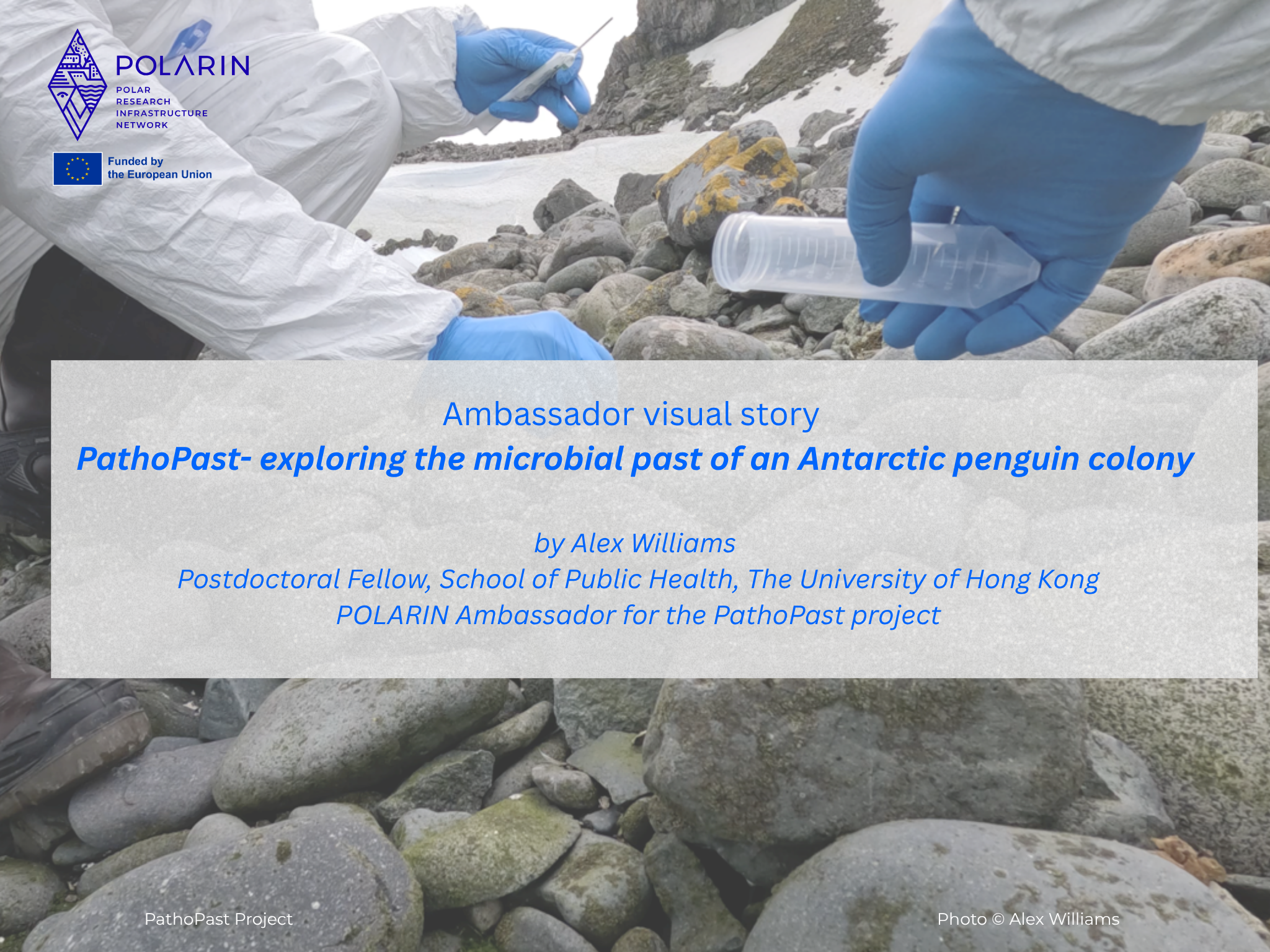
PathoPast- exploring the microbial past of an Antarctic penguin colony
POLARIN has published a new Ambassador visual story from the field titled “PathoPast- exploring the microbial past of an Antarctic penguin colony” written by Alex Williams, Postdoctoral Fellow, School of Public Health, The University of Hong Kong and POLARIN Ambassador for the PathoPast project.
The PathoPast project investigates the long-term microbial history of Antarctic penguin colonies by analyzing ancient lake sediments enriched with preserved penguin guano. Because the cold Antarctic environment helps preserve microbial genetic material in lake sediments and penguin guano, researchers can use these preserved records to investigate the microbial history of ancient penguin colonies. A team of three scientists traveled to King George Island, Antarctica, where they spent three weeks collecting lake sediment cores, soil, water, and fresh penguin fecal samples from active colonies while following strict contamination prevention procedures.
With his photographs and reflections, Alex showcase the scientific value, the physical challenges, and beauty of conducting research in Antarctica. Harsh weather, difficult terrain, and partially frozen lakes complicated fieldwork, but the team successfully collected sediment cores from both a former penguin colony site and a control lake with no known penguin activity. Along the way, they observed Antarctic wildlife, including gentoo, Adélie, and chinstrap penguins, elephant seals, skuas, giant petrels, and towering icebergs, emphasizing the region’s unique ecosystem. The collected samples will help researchers better understand how Antarctic microbial communities and pathogens have changed over thousands of years, providing valuable insights into wildlife health and environmental change.
Read Alex’s visual story from the field to learn more about the science and experiences behind the PathoPast project.
PathoPast was one of the projects successfully selected through POLARIN’s first call for Transnational Access to Polar Research Infrastructures.