From the High Himalayas to the High Arctic
How do plants survive and function under extreme environmental conditions?
The HIGHPLANTS project brings together two geographically distant but environmentally comparable cold deserts: the high Arctic and the high-altitude Himalayas.
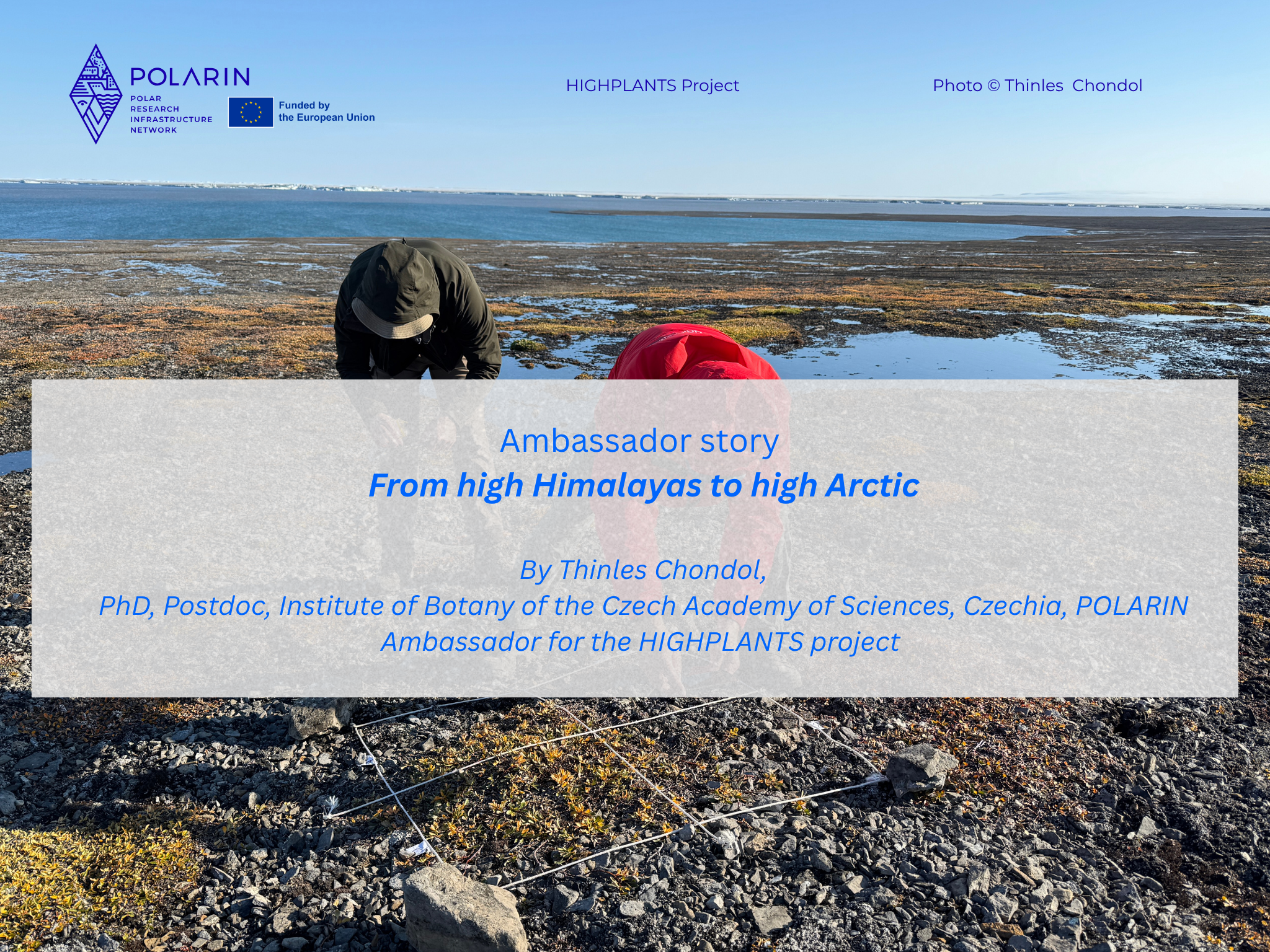
During their POLARIN-supported field campaign, Thinles Chondol and colleagues from the Institute of Botany of the Czech Academy of Sciences and the University of South Bohemia travelled to Villum Research Station (Station Nord) in northeastern Greenland, one of the most remote research stations in the Arctic.
The team established vegetation plots along a transect towards the glacier moraine, measured the photochemical performance of dominant Arctic plant species, and collected soil samples for microbial and physicochemical analyses.
Working under the midnight sun, the researchers also experienced rapidly changing Arctic conditions, including strong winds, snowstorms and blizzards.
For the team, the Arctic landscape offered a striking comparison with the cold deserts of Ladakh, India, which they have studied extensively. Despite being separated by thousands of kilometres, the two environments share features such as low temperatures, short growing seasons and strong environmental stress.
HIGHPLANTS aims to determine whether plants in these contrasting regions use similar or different strategies to survive and function under extreme conditions.
The comparison is particularly relevant as both the Arctic and high Himalayas are undergoing rapid environmental change. By studying plant functioning, functional traits, growth and plant–microbial interactions across these two cold deserts, the project will contribute to a better understanding of how plants respond to extreme environments and changing climates.
More details, photographs, and personal impressions from the expedition are shared in the HIGHPLANTS Ambassador story by Thinles Chondol and at the Ambassador photo gallery.
HIGHPLANTS was one of the projects successfully selected through POLARIN’s second call for Transnational Access to Polar Research Infrastructures.