January 14, 2026

News

Following Microscopic Life Through the Glacier Melt Season –  New POLARIN Ambassador Blog Post!

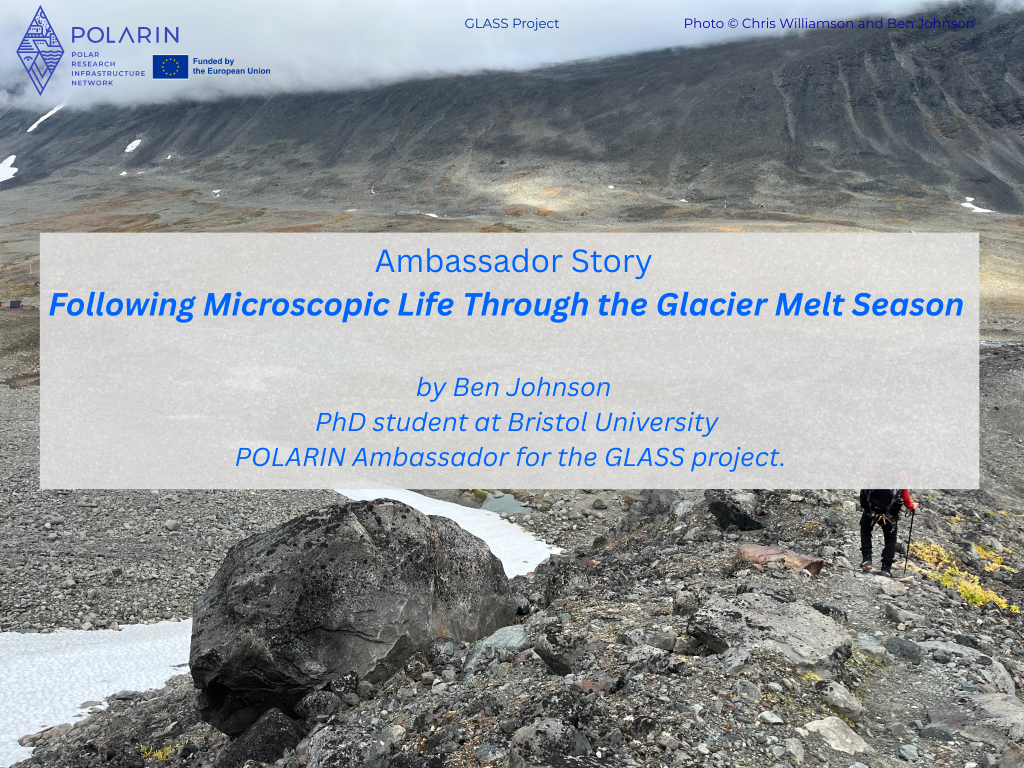
Following Microscopic Life Through the Glacier Melt Season-  New POLARIN Ambassador Blog Post! In summer 2025, the GLASS (Glacier Algal Sampling Strategies) project from the University of Bristol headed to Tarfala Research Station in northern Sweden to study blooms of microscopic algae on Storglaciären through the melt season.   A heatwave in July brought melting around the station and uncovered colourful algal patches in the snow, giving the team an early glimpse of life on the ice. By August, the bare glacier surface allowed detailed sampling and drone surveys that captured the peak of the bloom, and a final visit in September captured how these ecosystems had evolved by the end of the melt season. These field campaigns are helping scientists build the datasets needed to improve how satellites observe biological activity onglaciers in a warming world.   Read more in the GLASS fieldwork blog by Ben Johnson, PhD student at Bristol University and POLARIN Ambassador for the GLASS project.   GLASS was funded by POLARIN’s first call for Transnational Access to Research Infrastructures.
Ambassador

The scoop on SCOOP – A High Arctic fieldwork project funded by POLARIN

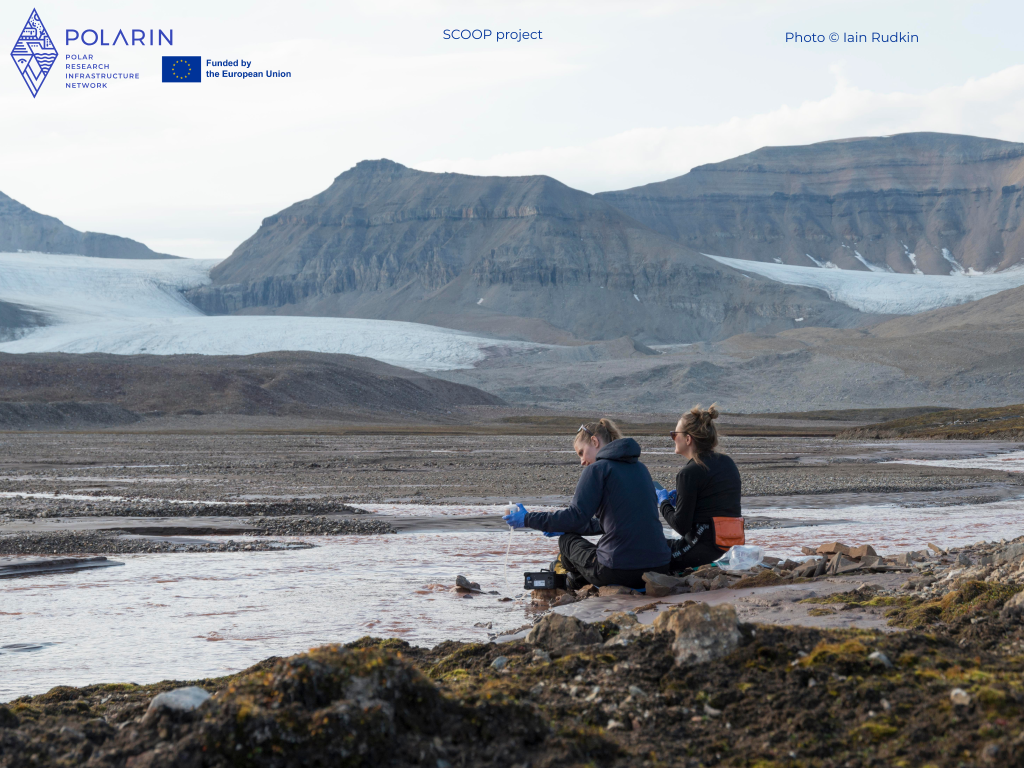
The scoop on SCOOP – A High Arctic fieldwork project funded by POLARIN by Ambassadors Eva Doting, Postdoc at the Norwegian Institute for Nature Research Tromsø, Visiting Scholar at the University of Pennsylvania,   and Anne Kellerman Research Associate at the University of Pennsylvania, Visiting Scholar at the Florida State University.   In summer 2025, the researchers Eva Doting and Anne Kellerman traced Arctic meltwater from glacier ice to fjord in Ny-Ålesund, Svalbard, to better understand how carbon and nutrients move through rapidly changing polar landscapes. Working through the POLARIN-funded SCOOP project, the team sampled water and sediments along the flow paths of Austre Brøggerbreen and Midtre Lovénbreen, capturing how glacier retreat is reshaping connections between land and sea.   By analyzing these samples in the lab, Eva and Anne are now revealing how melting ice and newly exposed soils influence the supply of organic matter to Arctic fjords and help us better predicting how coastal arctic ecosystems will respond to a warming climate.   Read more in the SCOOP fieldwork blog by the POLARIN Ambassadors Eva Doting and Anne Kellerman.   SCOOP  was one of the projects successfully selected through POLARIN’s first call.  Download

Scroll to Top