Author name: Maria Grigoratou

News

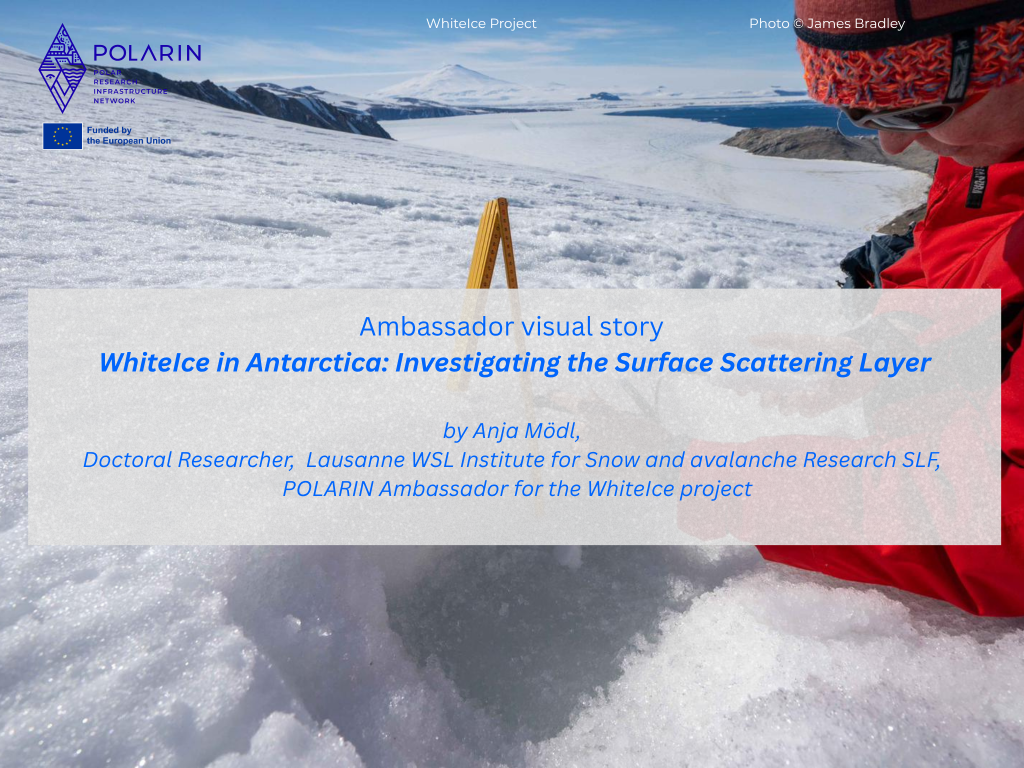
WhiteIce in Antarctica: Investigating the Surface Scattering Layer- New Ambassador visual story from the field!

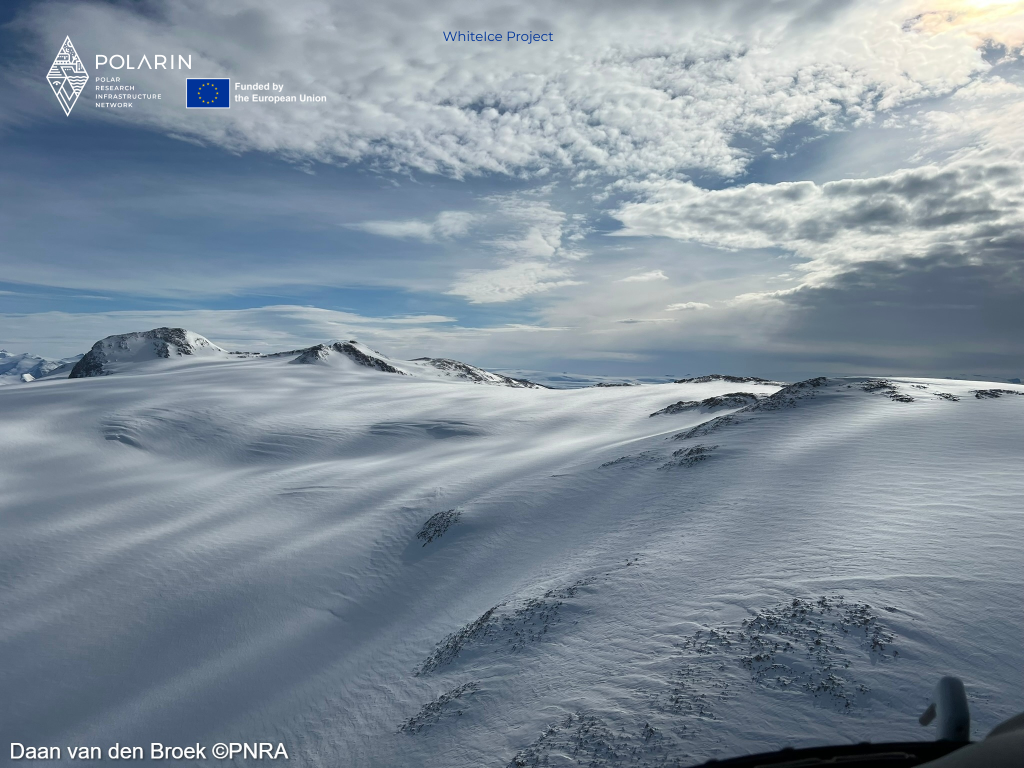
WhiteIce in Antarctica: Investigating the Surface Scattering Layer How the Antarctic ice surface exchanges energy with the atmosphere remains one of the key uncertainties in climate modelling. During the 2024–2025 field season, Anja Mödl, together with her team, travelled to Mario Zucchelli Station in East Antarctica to investigate a little-studied feature known as the surface scattering layer (SSL).   The expedition was supported through POLARIN’s first Transnational Access call and combined automated monitoring with intensive on-site measurements on the Nansen Ice Shelf, around 37 kilometres from the research station. The focus was on how summer melting reshapes the ice surface and alters the local energy balance.   The SSL develops when bare glacier ice begins to melt, allowing meltwater to seep into the surface and later evaporate. What remains is a layer of granular ice crystals that can resemble snow, but is actually a transformed ice surface. Capturing how this layer forms and evolves is important for improving the way climate models represent polar ice processes.   Fieldwork in Antarctica comes with logistical and environmental challenges, and this campaign was no exception. Alongside technical work, the team operated in the striking environment of Terra Nova Bay, where encounters with Adélie penguins, seals, and skuas were part of the daily backdrop.   More details are shared in the WhiteIce Ambassador visual story by Anja Mödl.   WhiteIce was one of the projects successfully selected through POLARIN’s first call for Transnational Access to Polar Research Infrastructures.

Ambassador

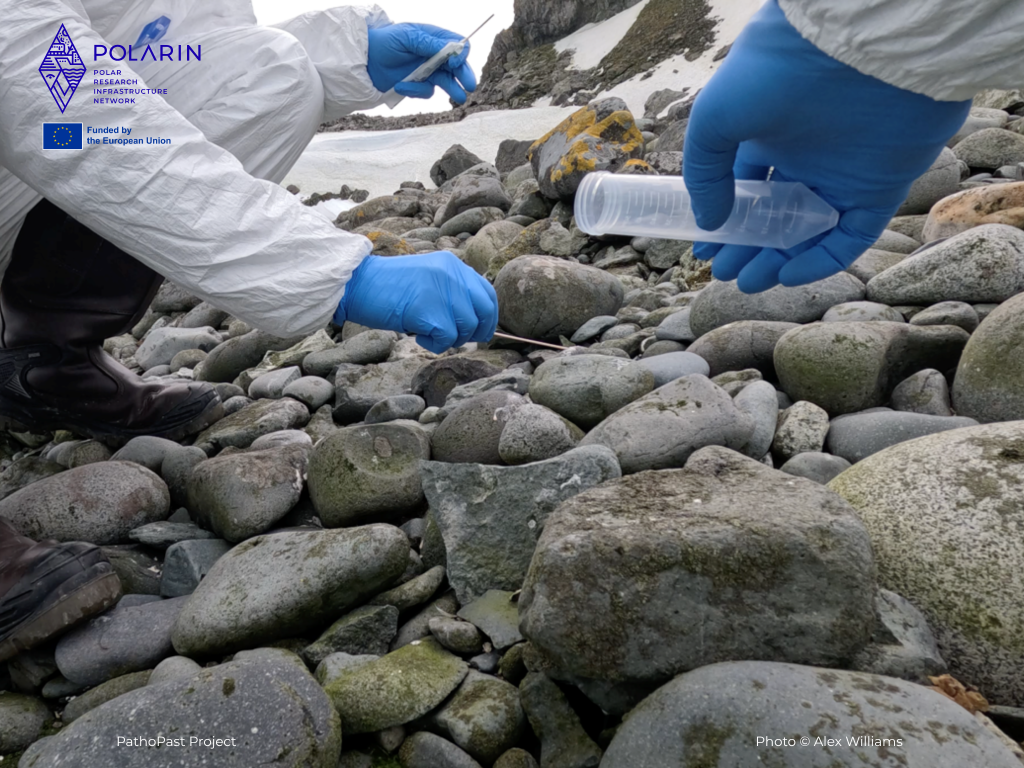
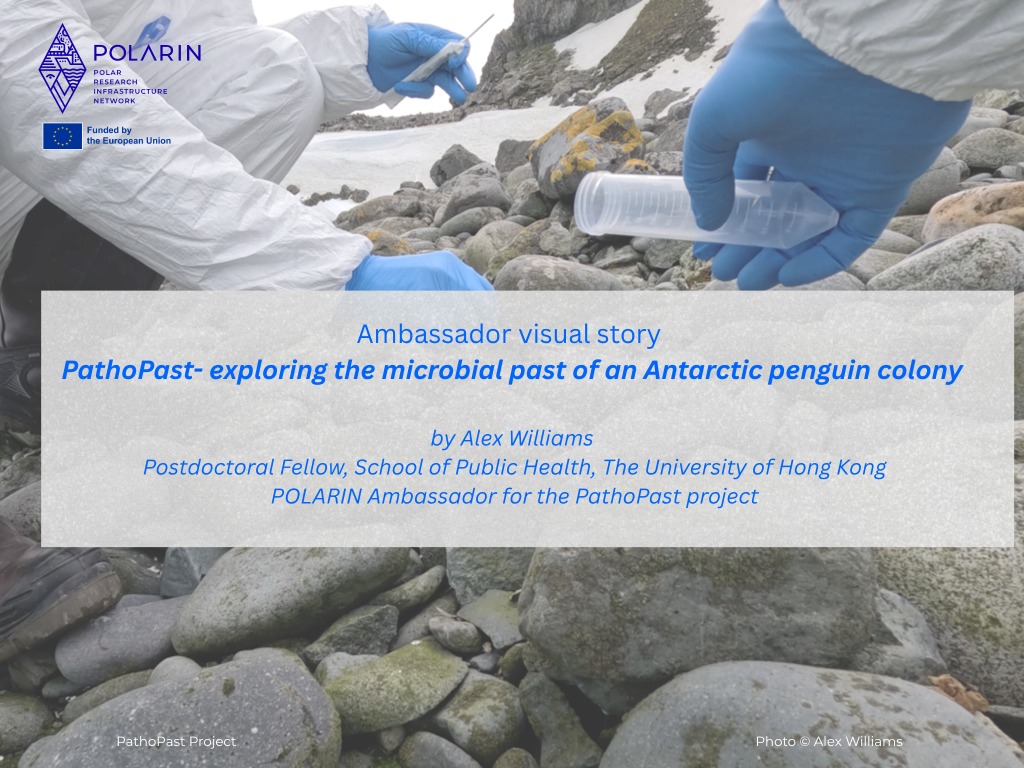
PathoPast- exploring the microbial past of an Antarctic penguin colony

PathoPast- exploring the microbial past of an Antarctic penguin colony A visual story from the field by Alex Williams, Postdoctoral Fellow, School of Public Health, The University of Hong Kong and POLARIN Ambassador for the PathoPast project.   In this visual story, Alex shares his experience as part of the PathoPast field team during an expedition to King George Island, Antarctica. Through photographs and personal reflections, he describes the challenges of conducting research in one of the world’s most remote environments while collecting lake sediment cores, water, soil, and penguin guano samples. These samples will be used to investigate the microbial history of ancient penguin colonies, helping scientists better understand how microbial communities and pathogens have changed over thousands of years.   The story also highlights the remarkable Antarctic landscape and wildlife encountered during the expedition, including gentoo, Adélie, and chinstrap penguins, elephant seals, and seabirds. By documenting both the scientific fieldwork and the realities of life in Antarctica, Alex provides readers with an engaging insight into polar research and demonstrates how preserved environmental records can reveal the ecological and disease history of Antarctic ecosystems.   PathoPast was one of the projects successfully selected through POLARIN’s first call for Transnational Access to Polar Research Infrastructures. Download

News

PathoPast- exploring the microbial past of an Antarctic penguin colony- New Ambassador visual story from the field!

PathoPast- exploring the microbial past of an Antarctic penguin colony POLARIN has published a new Ambassador visual story from the field titled “PathoPast- exploring the microbial past of an Antarctic penguin colony” written by Alex Williams, Postdoctoral Fellow, School of Public Health, The University of Hong Kong and POLARIN Ambassador for the PathoPast project.   The PathoPast project investigates the long-term microbial history of Antarctic penguin colonies by analyzing ancient lake sediments enriched with preserved penguin guano. Because the cold Antarctic environment helps preserve microbial genetic material in lake sediments and penguin guano, researchers can use these preserved records to investigate the microbial history of ancient penguin colonies. A team of three scientists traveled to King George Island, Antarctica, where they spent three weeks collecting lake sediment cores, soil, water, and fresh penguin fecal samples from active colonies while following strict contamination prevention procedures.   With his photographs and reflections, Alex showcase the scientific value, the physical challenges, and beauty of conducting research in Antarctica. Harsh weather, difficult terrain, and partially frozen lakes complicated fieldwork, but the team successfully collected sediment cores from both a former penguin colony site and a control lake with no known penguin activity. Along the way, they observed Antarctic wildlife, including gentoo, Adélie, and chinstrap penguins, elephant seals, skuas, giant petrels, and towering icebergs, emphasizing the region’s unique ecosystem. The collected samples will help researchers better understand how Antarctic microbial communities and pathogens have changed over thousands of years, providing valuable insights into wildlife health and environmental change.   Read Alex’s visual story from the field to learn more about the science and experiences behind the PathoPast project.   PathoPast was one of the projects successfully selected through POLARIN’s first call for Transnational Access to Polar Research Infrastructures.

News

Into the White: A Scientist’s Journey to the Antarctic Ice Sheet – New Ambassador blog story!

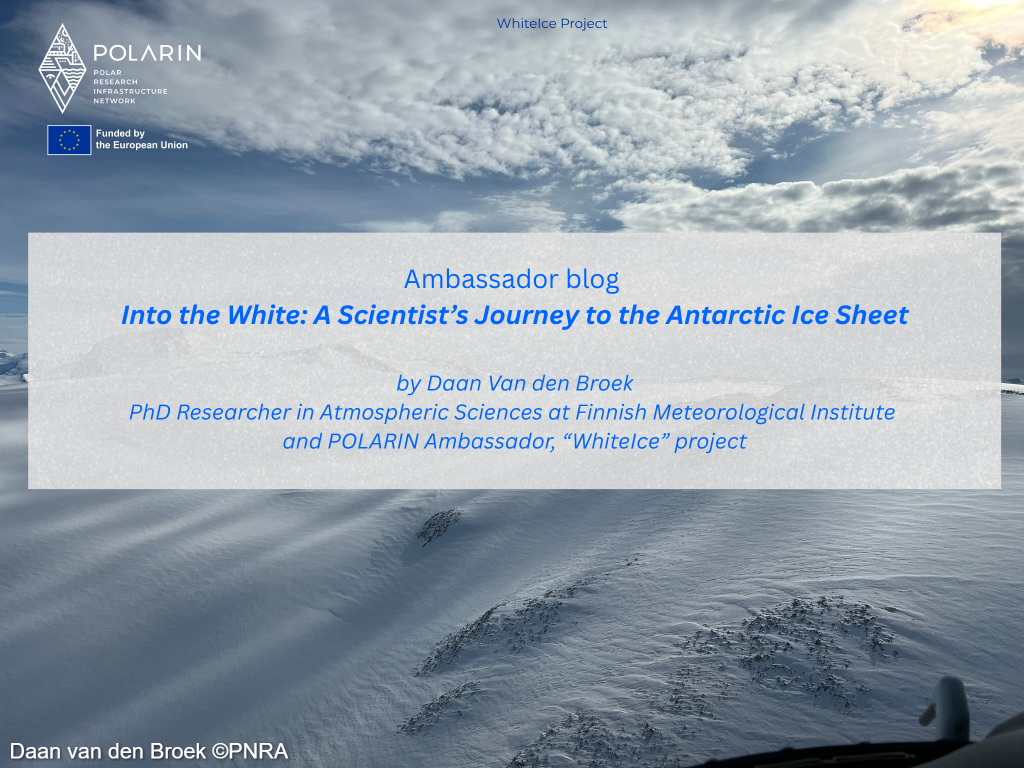
Into the White: A Scientist’s Journey to the Antarctic Ice Sheet POLARIN has published a new Ambassador blog titled “Into the White: A Scientist’s Journey to the Antarctic Ice Sheet” written by Daan Van den Broek, PhD Researcher in Atmospheric Sciences at Finnish Meteorological Institute and POLARIN Ambassador, “WhiteIce” project.     What does it take to conduct climate research in one of the most remote places on Earth? In his blog, Daan shares a first-hand account of his participation in the POLARIN-funded WhiteIce expedition to Antarctica.   The blog follows Daan’s journey from joining the expedition team and preparing for months of fieldwork to carrying out scientific measurements on the Nansen Ice Sheet near the Mario Zucchelli Station. The WhiteIce project investigates the “surface scattering layer,” or “white ice”, a bright layer that forms on melting ice surfaces and influences how much sunlight is reflected back into space. By collecting weather, radiation and drone observations, the research aims to improve climate models and strengthen projections of future climate change.   Alongside the science, Daan reflects on the realities of polar fieldwork, from complex logistics and changing weather conditions to the breathtaking landscapes of Antarctica. His story highlights both the challenges and the rewards of conducting research in extreme environments, demonstrating how international collaboration, careful preparation and adaptability are essential for successful polar science.   Read Daan’s full blog to discover the people, science and experiences behind the White Ice project.   WhiteIce was one of the projects successfully selected through POLARIN’s first call for Transnational Access to Polar Research Infrastructures.

Ambassador

Into the White: A Scientist’s Journey to the Antarctic Ice Sheet

Into the White: A Scientist’s Journey to the Antarctic Ice Sheet A blog by Daan Van den Broek, PhD Researcher in Atmospheric Sciences at Finnish Meteorological Institute and POLARIN Ambassador, “WhiteIce” project.   Daan’s blog is a story of atmospheric scientist participating in the POLARIN-funded WhiteIce expedition to Antarctica. It describes his journey from being selected for the project, through months of intensive preparation, to conducting fieldwork on the Nansen Ice Sheet near the Mario Zucchelli Station. The expedition focused on studying the “surface scattering layer” (or “white ice”), a bright layer that forms on melting ice and affects how much sunlight is reflected back into space. By collecting weather, radiation, and drone data, the research aims to improve climate models and enhance predictions of future climate change.   Beyond the scientific objectives, the blog acts as a personal reflection on the challenges and rewards of polar research. Van describes the demanding logistics, unpredictable weather, and the need for flexibility during fieldwork, while also highlighting the breathtaking Antarctic landscape and the unforgettable experience of working in one of the world’s most remote environments. Despite setbacks, such as an earlier-than-expected melt season, the team successfully gathered valuable data and emphasized the importance of international collaboration and logistical support in making the expedition a success.   WhiteIce was one of the projects successfully selected through POLARIN’s first call for Transnational Access to Polar Research Infrastructures.   Download

News

Arctic Carbon Cycling: Linking terrestrial and aquatic systems (ARC-LINK) – New Ambassador visual story from the field!

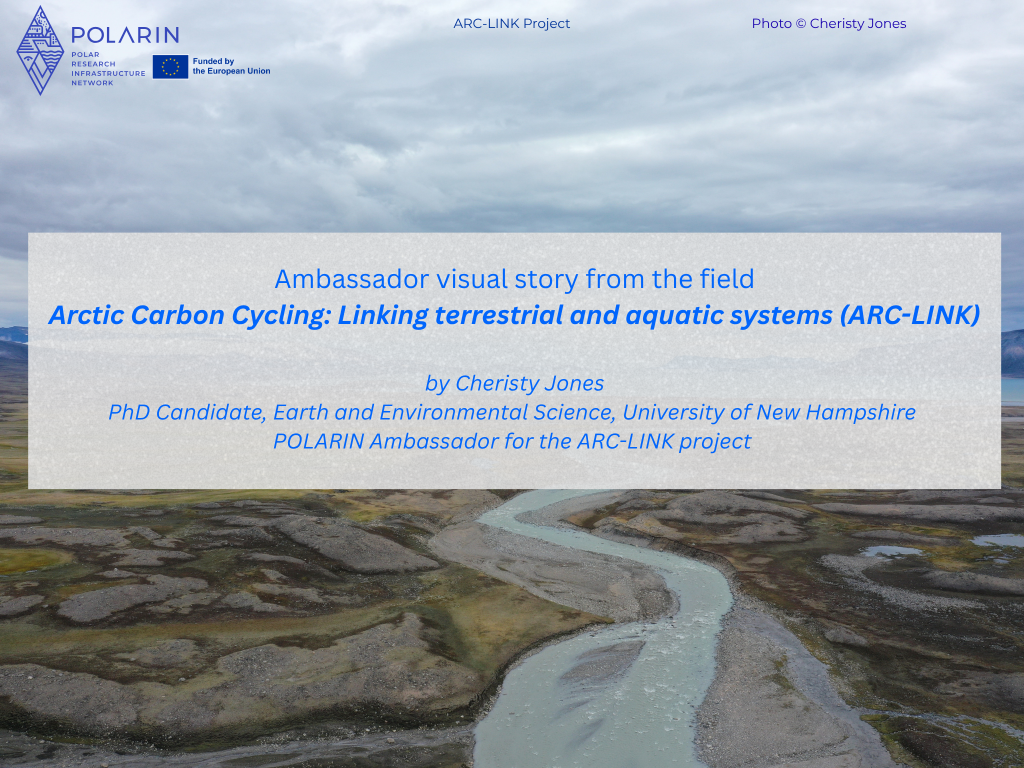
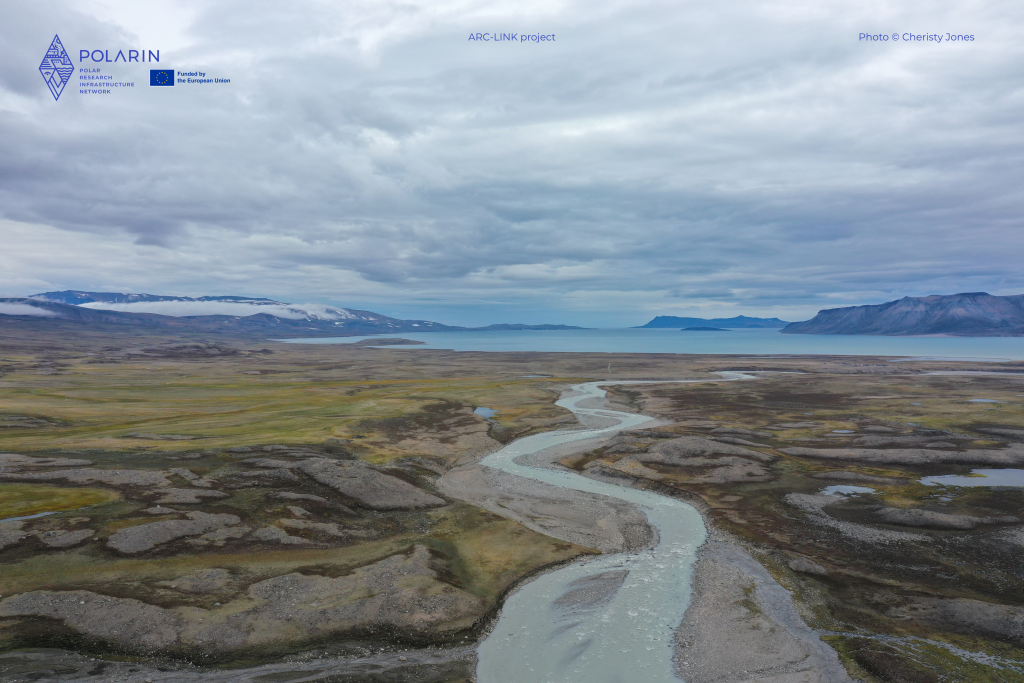
Arctic Carbon Cycling: Linking terrestrial and aquatic systems (ARC-LINK) POLARIN has published a new Ambassador visual story titled Arctic Carbon Cycling: Linking terrestrial and aquatic systems (ARC-LINK) developed by Cheristy Jones, POLARIN Ambassador, PhD Candidate, Earth and Environmental Science, University of New Hampshire.     For the ARC-LINK project, Cheristy travelled from Boston, USA to Zackenberg, Greenland to study how carbon and nutrients move through permafrost catchments, compare glacial and non-glacial systems at high spatial resolution and how aquatic carbon connects to CO₂ and CH₄ emissions. Through her photographs and reflections, Cheristy travels us to Greenland to witness permafrost thaw, Arctic flora and fauna.   Explore Cheristy’s visual story to learn more.   ARC-LINK was one of the projects successfully selected through POLARIN’s first call for Transnational Access to Polar Research Infrastructures.

News

Save the date: POLARIN Brokerage Event for the 3rd Transnational Access Call​

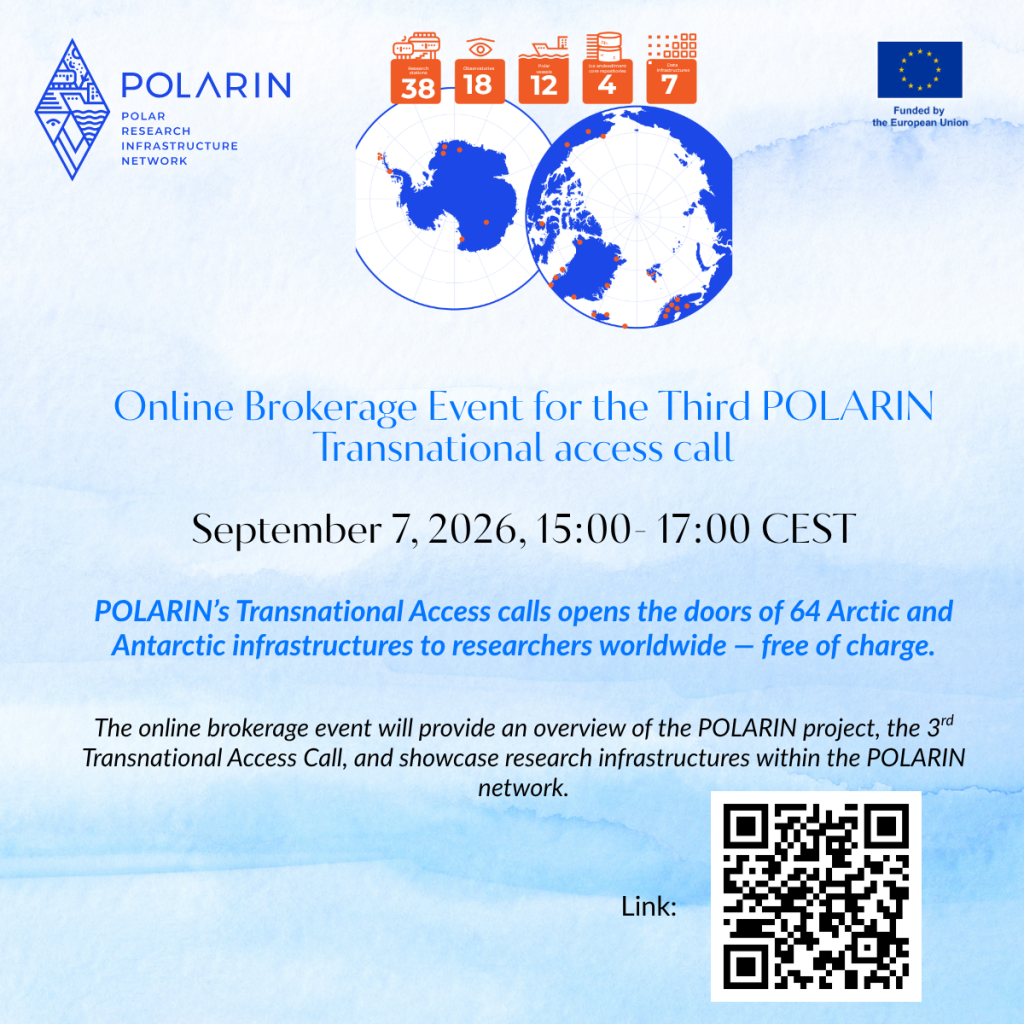
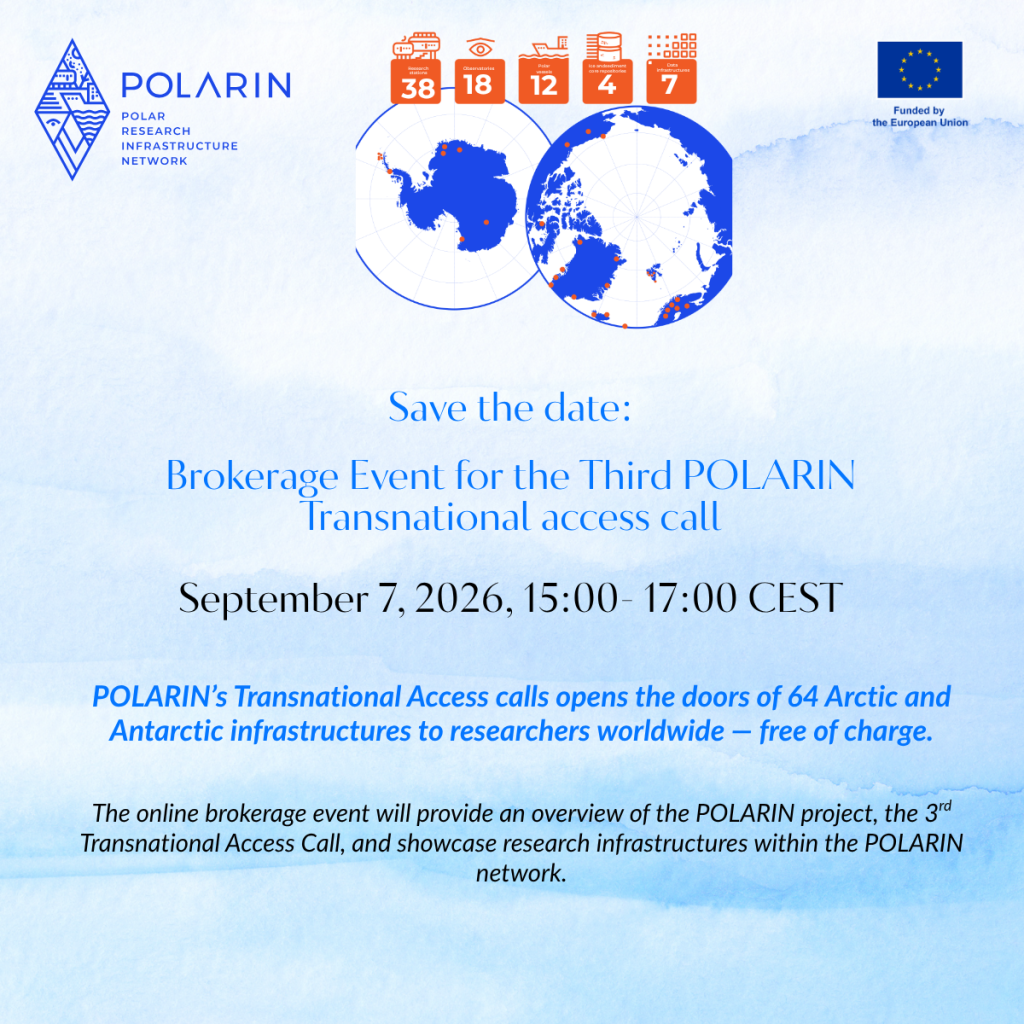
Save the date: POLARIN Brokerage Event for the 3rd Transnational Access Call Thinking about applying to POLARIN’s 3rd Transnational Access Call for access to Polar Research Infrastructures?   Join our Online Brokerage Event on September 7, 2026 15:00-17:00 CEST for an overview of the of the POLARIN project and its Transnational Access Calls and selected research infrastructures from the POLARIN network.   More information and registration link will be available in August.   The 3rd POLARIN TA call opens on September 1 and closes on October 29 at 16:00 CET.

Ambassador

Arctic Carbon Cycling: Linking terrestrial and aquatic systems (ARC-LINK)

Arctic Carbon Cycling: Linking terrestrial and aquatic systems (ARC-LINK) A visual story by Cheristy Jones, POLARIN Ambassador, PhD Candidate, Earth and Environmental Science, University of New Hampshire.   The Arctic is changing rapidly, with important consequences for carbon cycling. Cheristy Jones, a fifth-year PhD candidate at the University of New Hampshire, travelled from Boston, USA to Zackenberg, Greenland to study how carbon and nutrients move through permafrost catchments, compare glacial and non-glacial systems at high spatial resolution and how aquatic carbon connects to CO₂ and CH₄ emissions.   Cheristy’s visual story provide us with photographic captures and insights from her field work in Greenland, including training in the field, permafrost thaw, arctic flora and fauna. As Cheristy notes:   “Our time in Zackenberg flew by and we were sad to leave all of the amazing new people we met. Hopefully, we will be back to expand our work in the future. Through POLARIN, I was able to expand my PhD research beyond my original field sites and apply my questions about carbon cycling to a new Arctic region. The program provided hands-on experience with eddy covariance data, strengthening my skills in flux processing and interpretation. Just as importantly, POLARIN broadened my collaborations and professional network, connecting me with international researchers and opening doors for future cross-site and interdisciplinary work. POLARIN provided a rare opportunity for PhD students to lead their own grant.”   ARC- LINK was one of the projects successfully selected through POLARIN’s first call for Transnational Access to Polar Research Infrastructures.   Download

News

POLARIN’s 3rd Transnational Access Call Opens September 1st

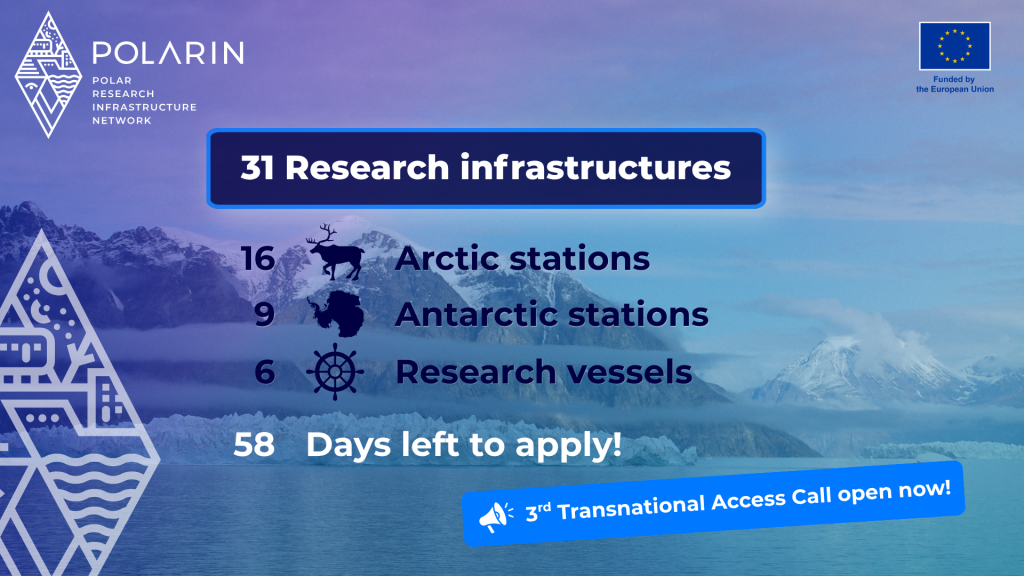
POLARIN’s 3rd Transnational Access Call Opens September 1st POLARIN, the EU-funded Polar Research Infrastructure Network, brings together 54 partners to provide researchers with free-of-charge access to marine and terrestrial research infrastructures across both the Arctic and Antarctic.   The 3rd POLARIN Transnational Access (TA) Call opens on September 1st and closes on October 29th, 16:00 CET. Successful applicants gain in-person or remote access to a wide range of Polar Research Infrastructures, including: Arctic and Antarctic research stations Polar vessels and icebreakers Observatories and data platforms   Useful information: POLARIN’s first two Transnational Access calls have already made an impact, funding a combined 71 research projects across both polar regions. To learn more about the funded projects visit https://eu-polarin.eu/polarin-funded-projects/ Interview with Verónica Willmott Puig, POLARIN Project Manager; Dr. Hannele Savela, POLARIN Transnational Access Coordinator; and Michele Rebesco from the POLARIN Evaluation Secretariat on the project’s vision, lessons from POLARIN’s first call, and what’s next for experts applying https://eu-polarin.eu/articles-interviews/ Information for TA users: https://eu-polarin.eu/information-for-ta-users/

News

Projects Funded by POLARIN’s Second Transnational Access Call Announced

Projects Funded by POLARIN’s Second Transnational Access Call (2025) Announced! POLARIN is pleased to announce the results of its Second Transnational Access (TA) Call, marking another important milestone in supporting excellent polar and cryosphere research across Europe and beyond. Following a highly competitive evaluation process 36 projects were ultimately granted POLARIN Transnational Access support, representing a success rate of 78% among the recommended proposals. We invite you to explore the full list of funded projects on our website, where you can find detailed information on their research objectives and participating research infrastructures: POLARIN Funded Projects – POLARIN The funded projects address a wide range of scientific questions related to the polar regions, including climate processes, ecosystem dynamics, ice-sheet interactions, atmospheric research, marine systems, and environmental change. Through access to POLARIN’s distributed network of terrestrial and marine polar research infrastructures, researchers will be able to generate new knowledge that contributes to understanding the rapidly changing Arctic and Antarctic environments. In total, 1,154 units of access were awarded across the 36 funded projects, enabling researchers to utilise a diverse range of facilities, services, observations, and data resources available through the POLARIN consortium. The Second TA Call highlights POLARIN’s commitment to fostering an inclusive and diverse research community. Among the funded projects, 47 % are led by women and 53 % by men, reflecting a balanced distribution of leadership. Early Career Researchers lead 15 of the 36 user groups (42 %). The selected projects bring together researchers from a wide range of institutions and countries, underscoring the international reach of polar research and the strong demand for access to specialised research infrastructures. By facilitating access to unique facilities and expertise, POLARIN continues to strengthen collaboration across the polar research community and support scientific excellence in addressing some of the most pressing environmental challenges of our time.

News

POLARIN Webinar Highlights the Future of Virtual Access for Polar Research

POLARIN Webinar Highlights the Future of Virtual Access for Polar Research On April 9, 2026, POLARIN hosted a webinar on the provision of Virtual Access (VA) for polar research infrastructures (RIs). The event focused on how RIs can provide user-friendly, free, and open online access to scientific data, metadata, and data services, aligning with POLARIN’s mission to enhance data discoverability, interoperability, and reuse. During the webinar, participants learned about: The objectives of POLARIN VA, including publishing non-public data, improving FAIR compliance, and aggregating datasets in a standardized way. The benefits of VA compliance for RIs, such as accelerating research, enabling societal applications (e.g., climate models), and increasing competitiveness for future funding. The technical and metadata requirements for making databases VA-compatible, including standardized APIs (OAI-PMH, OGC CSW), metadata models, and best practices for data management. The legal obligations for RIs participating in POLARIN VA and the risks of non-compliance. The webinar also highlighted case studies from observation networks, data infrastructures, and research stations involved in POLARIN, as well as the POLARIN metadata catalogue, which acts as a broker to harvest and enrich metadata without moving the underlying data.   You can find the recording of the webinar in our Youtube channel and via this link.   The presentation slides are available via the download button below.   The webinar was organized by the SIOS Knowledge Centre (SIOS-KC) and ETT on behalf of POLARIN WP4 “Improvement of data services and customised data products” and WP5 “Provision of Virtual Access.” Download

News

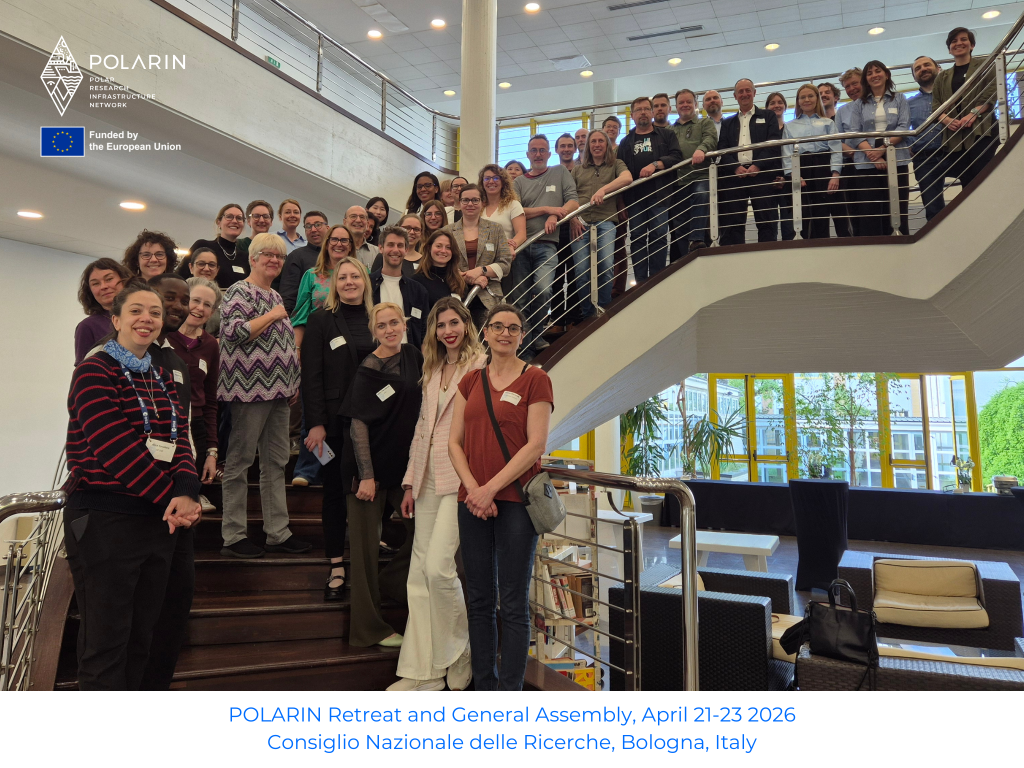
POLARIN Strengthens Collaboration at Annual Retreat and General Assembly in Bologna

POLARIN Strengthens Collaboration at Annual Retreat and General Assembly in Bologna The POLARIN consortium has successfully concluded its three-day annual retreat and General Assembly in Bologna on April 21-23, bringing together partners from across Europe and beyond to advance cooperation, innovation, and access in polar research. Hosted by the National Research Council of Italy, the gathering provided an important opportunity for the project’s partners to meet in person, review progress, and shape the next phase of POLARIN’s mission to create a more connected and coordinated polar research infrastructure network. A Productive Three Days of Exchange and Planning The retreat opened with focused discussions on lessons learned from the first two Transnational Access Calls. Partners explored ways to address key knowledge gaps, optimise future calls, strengthen training opportunities through shared expertise, and improve how POLARIN engages with broader audiences. Through presentations, breakout sessions, and informal exchanges, participants worked collaboratively to refine ideas and identify practical steps for continued progress. Advancing Open Science and Data Access Day two placed a strong spotlight on one of POLARIN’s pillars: Data. Sessions highlighted the project’s commitment to open science, including the ongoing development of the POLARIN Data Hub, designed to improve usability and accessibility for researchers worldwide. Discussions also focused on Virtual Access, an initiative providing free, user-friendly access to previously unavailable polar scientific data, metadata, and data services. A separate management session addressed project coordination, reporting, and financial processes, allowing partners to exchange experiences and share solutions to common challenges. The day concluded with a guided walking tour through Bologna, offering participants a chance to continue conversations while experiencing the city’s rich cultural heritage. General Assembly Highlights Strong International Network The final day was dedicated to the POLARIN General Assembly, attended by consortium members and invited guests from Aquarius, Antarctica InSynch, Forel, SCAR, JAMSTEC, and members of POLARIN’s Advisory Board. A key highlight was hearing directly from Transnational Access users and Early Career Scientists Mariana Garcia Criado (BIPOLAR project), Patricia Kaye Tahura Dumandan (TEPMNET project) and Alex Williams (PathoPast project), who shared first-hand experiences of fieldwork made possible through POLARIN. Their contributions demonstrated the real-world impact of the project in enabling scientific research in polar regions. Across presentations, panel discussions, and personal exchanges, one clear message emerged: POLARIN is not only operational, it is already proving how international collaboration at scale can succeed in practice for both poles. Building on the experience of previous EU projects (INTERACT I, II, III, ARICE, and Eurofleets) and the combined expertise of its 54 partners, POLARIN provides a model for the future of European polar research based on sustained funding through FP10, optimized use of diverse polar infrastructure networks, and strengthened international cooperation within and beyond Europe. Powered by People At the heart of POLARIN is its dedicated network of people. The retreat reinforced the value of meeting face-to-face to exchange ideas, strengthen partnerships, and keep momentum strong as the project evolves.  As the retreat concludes, the message is clear: through collaboration, coordination, and shared commitment, POLARIN is demonstrating how the future of polar research infrastructure transnational access can be built across Europe and beyond. POLARIN warmly thanks the National Research Council of Italy for their hospitality and for making the POLARIN meetings such a success.  
Ambassador

WhiteIce in Antarctica: Investigating the Surface Scattering Layer

WhiteIce in Antarctica: Investigating the Surface Scattering Layer Understanding how the Antarctic ice surface interacts with the atmosphere is essential for improving climate models. During the 2024–2025 field season, POLARIN Ambassador and Doctoral Researcher at  the Lausanne WSL Institute for Snow and avalanche Research SLF, Anja Mödl and colleagues travelled to Mario Zucchelli Station in East Antarctica to investigate the formation of the surface scattering layer (SSL).   Supported by POLARIN’s first call for Transnational Access to polar research infrastructures, the research team installed automatic weather stations and conducted detailed manual surface measurements on the Nansen Ice Shelf, located about 37 km from the station. Their goal was to better understand how melting processes transform the ice surface and how these changes influence the surface energy balance.   The SSL forms when bare ice begins to melt and meltwater percolates downward and evaporates. What remains is a granular layer of ice crystals that resembles snow but is actually transformed ice. Understanding how this layer forms and evolves is important for representing ice surface processes more accurately in global climate models.   Despite some challenges, the campaign provided valuable observations of surface processes on the Antarctic ice shelf. Alongside their measurements, the team also experienced the unique Antarctic environment. Hiking around the spectacular landscapes around Terra Nova Bay they encounter Adélie penguins, seals and skuas near the station.   Read more in the WhiteIce Ambassador visual story by Anja Mödl, Doctoral Researcher at  the Lausanne WSL Institute for Snow and avalanche Research SLF and POLARIN Ambassador. Download

News

POLARIN Launches Second TA Call for Access to Core Repositories

POLARIN Launches Second TA Call for Access to Core Repositories The POLARIN project opened its second Transnational Access (TA) Call for Access to Core Repositories on April 7. POLARIN has four core repositories in its network: UiT CORES, BAS-PSCF, AWI-SED, AWI-ICE. In this first call, access will be offered to two repositories: UiT CORES and BAS-PSCF.   Researchers seeking access to POLARIN’s core repository sample collections will have until 5 June 2026, 4 pm CEST to submit their applications. Following the submission deadline, applications will undergo an assessment carried out by the Research Infrastructure (RI) operators and call results are expected by the end of June 2026.   Applicants will be required to complete an online form providing essential project details, including the project title, summary, anticipated publications, alignment with POLARIN’s key research priorities, and proposed access dates for sample acquisition or shipment. In addition to the online form, the following documents must be uploaded as attachments: A sample request form The CV of the project leader A tentative Data Management Plan, which is a mandatory component under POLARIN guidelines Early Career Researchers (ECRs) applying for sample access will also need to include one to two recommendation letters from their academic supervisors. You can learn more about the call and how to apply here.

News

Preparing for Polar Fieldwork: Join the POLARIN Webinar Series This April

Preparing for Polar Fieldwork: Join the POLARIN Webinar Series This April Are you preparing for fieldwork in the Arctic or Antarctic? Whether you’re headed to land-based stations or embarking on polar research vessels, planning is key to a successful and safe research campaign. Join us on 9 April, 13-15 GMT and 16 April, 13-15 GMT for a two-part series of POLARIN fieldwork planning webinars to learn more about how to navigate logistics challenges, understand risk assessment and field safety, implement ethical and sustainable research practices, and plan effective data management from the start. These trainings are organized by the Polar Research Infrastructure Network (POLARIN), a project providing transnational access to polar research infrastructures and offering training resources for infrastructure users and the wider polar research community. The webinars will provide you with an overview on a variety of topics related to planning polar fieldwork: Part I (9 April, 13-15 GMT) Introduction to the POLARIN project and its opportunities for researchers Ensuring safe and efficient fieldwork on research vessels in polar waters Using the POLARIN GIS for planning terrestrial fieldwork Accessing data through the POLARIN data infrastructure Interactive training on data processing and stewardship Time for your questions and interaction with speakers and other participants Part II (16 April, 13-15 GMT) Learnings from experiences of research infrastructure managers and early career researchers Equitable and ethical research collaboration and community engagement in the Arctic Building safe and welcoming field environments and team culture Sharing tips and tricks for polar fieldwork planning amongst webinar participants Stories and recommendations from participants of the POLARIN ambassador programme on media content creation in the field Time for your questions and interaction with speakers and other participants The training sessions are open to all — from early career researchers to experienced polar scientists. Please register to attend the two different sessions on 9 April (Part I) and 16 April (Part II). We recommend that you watch the recording of last year’s POLARIN webinar prior to attending. Both sessions this year will build on this webinar from last year and provide additional tips and recommendations drawing on learnings from experienced field leaders and early career researchers. This webinar on polar fieldwork planning is organized by the Association of Polar Early Career Scientists (APECS), the University of Copenhagen (UCPH), the National Institute of Oceanography and Applied Geophysics (OGS), the Svalbard Integrated Arctic Earth Observing System (SIOS), Aarhus University (AU), the National Research Council of Italy (CNR), ETT Solutions (ETT), and FL Polar Operation (FLPO) together with experts from the POLARIN project and the wider polar research community.

News

POLARIN at the Arctic Science Summit Week 2026

POLARIN at the Arctic Science Summit Week 2026 POLARIN will be actively represented at the Arctic Science Summit Week 2026, bringing together its community of researchers and partners to showcase opportunities for collaboration, access, and innovation across polar research.   From 25 March to 1 April 2026, POLARIN members will be present at a joint booth with INTERACT Non-Profit Association, located in the main hall near the registration desk and main auditorium. Visitors are invited to stop by, meet the team, and learn more about the POLARIN network of research infrastructures across both the Arctic and Antarctic, as well as the Transnational Access opportunities available to researchers.   POLARIN Community Session – 28 March 2026 A key highlight of POLARIN’s presence at ASSW will be a dedicated session: POLARIN Community Networking and New Research Opportunities 📅 28 March 2026⏰ 10:00–12:00 CET (UTC+1)   This interactive session will bring together researchers supported by POLARIN to connect, exchange experiences, and foster new interdisciplinary collaborations across the polar research community. Participants will also gain insights into the upcoming 3rd Transnational Access call, designed to support access to polar research infrastructures, as well as new opportunities for Virtual Access to polar research data. The session is organised by Hannele Savela (University of Oulu, POLARIN) and Vanessa Spadetto (INTERACT Non-Profit Association, POLARIN).   POLARIN Contributions Across ASSW POLARIN members will also actively contribute to the broader ASSW programme. Nicole Biebow, POLARIN Project Coordinator, will present project updates at the FARO business meeting.   In addition, Nicole Biebow and WP2 lead Hannele Savela will take part in the EU Polar Cluster workshop, organized by the European Polar Coordination Office (EPCO) titled:  “Polar Science Beyond Projects: Legacy, Policy, and Impact”. The workshop will take place on 29 March 2026 from 08:00 to 12:00 CET. Nicole and Hannele will participate as a panelist and moderator respectively, contributing to discussions on the long-term impact and policy relevance of polar research initiatives.   POLARIN warmly invites all ASSW participants to visit the booth, join the dedicated session, and engage with the growing community working to advance access, collaboration, and excellence in polar research.

News

Introducing the POLARIN Data Hub

Introducing the POLARIN Data Hub The POLARIN Data Hub is a new platform designed to facilitate access to polar data and services from across the Arctic and Antarctic research community. Developed within the POLARIN, the Hub provides a single entry point to discover, explore, and access datasets and information generated by a wide range of polar research infrastructures. By bringing together data from different sources, the POLARIN Data Hub helps researchers and other users navigate the complex polar data landscape more easily. The platform aims to support improved data discovery, integration, and reuse, contributing to stronger collaboration and more efficient use of existing knowledge. The Data Hub is part of POLARIN’s broader effort to enhance access to polar research infrastructures and strengthen the scientific community’s capacity to study polar environments and their connections to the global Earth system. Through initiatives like the POLARIN Data Hub, the project supports more open, accessible, and coordinated polar science, helping researchers and stakeholders better understand the rapid changes taking place in the polar regions. 📄 Read more in the article by POLARIN member and lead developer of the Data Hub, Antonio Novellino, who explains its objectives and how it can support the polar research community: https://eu-polarin.eu/articles-interviews/ Explore the POLARIN Data Hub here: https://s4polarin.eu/#/  

News

Digging into penguin guano to uncover Antarctica’s disease history

Digging into penguin guano to uncover Antarctica’s disease history A research team supported by POLARIN’s first call for Transnational Access to Polar Research Infrastructures travelled to Antarctica to build the first historical archive of avian pathogens in the region for the project #PathoPast. Their approach may sound unusual: by analysing sediments preserved beneath Antarctic lakes, much of it containing ancient penguin guano, scientists can uncover traces of pathogens that affected wildlife hundreds or even thousands of years ago. Understanding this long-term disease history is becoming increasingly important. In recent years, highly pathogenic avian influenza has spread rapidly across the globe, causing major mortality among wild birds and even infecting several mammal species. As Alex Williams, POLARIN Ambassador and postdoctoral fellow in the School of Public Health at The University of Hong Kong explains:“Having a better understanding of past pathogen exposure can provide valuable context about the resilience of present-day penguin populations. With growing concerns about the spread of H5N1 in Antarctic ecosystems, this has never been more important.” Read more about their research and discoveries in the news articles (The Telegraph UK and University of Nottingham): https://www.telegraph.co.uk/global-health/science-and-disease/british-antarctic-team-dig-for-ancient-pathogens/ https://www.nottingham.ac.uk/news/scientists-antarctic-mission-to-reveal-ancient-pathogens-in-penguin-poo Photo (c): Alex Williams, Eduardo J. Pizarro, Martha Ledger, Martha Ledger

News

Ambassadors’ Photo Gallery Now Live on the POLARIN Website!

Ambassadors’ Photo Gallery Now Live on the POLARIN Website! The POLARIN Ambassadors Programme is thrilled to announce the launch of its brand-new photo gallery, now available for everyone to explore. This captivating collection features a treasure trove of images captured by our dedicated ambassadors directly from the field. You will discover stunning visuals of polar landscapes and research infrastructures, polar flora and fauna, dynamic moments of hands-on fieldwork, and mesmerizing polar sunsets that highlight the beauty and challenges of polar environments and polar research. At its core, the POLARIN Ambassadors Programme provides a platform for researchers supported by POLARIN to share their unique experiences and inspire fellow scientists and enthusiasts about polar research and polar regions. Whether through high-resolution photos, engaging videos, in-depth articles, or innovative multimedia formats, these ambassador stories open a vivid window into the world of polar research. They not only showcase groundbreaking work but also share insights to scientists and users of the POLARIN network’s research infrastructures toward new opportunities and discoveries. This initiative is specially dedicated to empowering early-career researchers by offering them a prominent stage to highlight their contributions, extending far beyond the confines of traditional academic publications. By amplifying their voices, we foster a stronger community, encourage knowledge exchange, and support the next wave of polar science innovation. Dive into the gallery today and get inspired!

News

Deep Roots in Thawing Permafrost – New POLARIN Ambassador Visual story!

Deep Roots in Thawing Permafrost POLARIN has published a new Ambassador visual story titled Deep Roots in Thawing Permafrost (DROP) at the Toolik Field Station developed by the POLARIN Ambassador and doctoral researcher at Umeå University Vanessa Götz.   The story combines photographs and reflections from the field with insights into the experimental work carried out at the Toolik Field Station in northern Alaska. The aim of the project is to investigate how plant rooting behaviour responds to warming conditions in tundra ecosystems through in-situ experiments and observations.  Alongside the science, Vanessa shares her experiences working in the Arctic, from rapidly changing weather and mosquito-filled field days to encounters with wildlife and the striking light of the midnight sun, while acknowledging that the research takes place on the ancestral lands of Indigenous peoples.   Explore Vanessa’s visual story to learn more.   DROP  was one of the projects successfully selected through POLARIN’s first call for Transnational Access to Polar Research Infrastructures.

Ambassador

Deep Roots in Thawing Permafrost (DROP) at Toolik Field Station

Deep Roots in Thawing Permafrost (DROP) at Toolik Field Station A visual story by Vanessa Götz, POLARIN Ambassador and doctoral researcher at Umeå University.   In the Arctic, where temperatures are rising faster than anywhere else on Earth, some of the most important changes are happening out of sight. The Deep Roots in Thawing Permafrost (DROP) project focuses on the hidden processes belowground, investigating how plant roots and soils respond to warming conditions in Arctic tundra ecosystems. Funded through POLARIN’s first Transnational Access call, the project was carried out at Toolik Field Station in northern Alaska during the summer of 2025, combining long-term field experiments with hands-on observations from the tundra.   Through a visual field story, Vanessa Götz, POLARIN Ambassador and doctoral researcher at Umeå University, offers us a glimpse into her daily life and field research in the High Arctic. From warming experiments and plant-removal plots to encounters with wildlife, wildfire smoke, and sudden summer snowfall, the visual story captures both the scientific urgency and human experience of Arctic fieldwork. By highlighting how changes belowground may influence carbon storage and future climate feedbacks, DROP helps connect local tundra processes to global warming and environmental change.   DROP  was one of the projects successfully selected through POLARIN’s first call for Transnational Access to Polar Research Infrastructures. Download

News

Beyond the Bite: Mapping Arctic Mosquito Viromes with a Mobile Sequencing Lab​​​- New POLARIN Ambassador Blog Post!

Beyond the Bite: Mapping Arctic Mosquito Viromes with a Mobile Sequencing Lab What does it take to sequence mosquito viruses in remote Arctic environments?   In a new POLARIN Ambassador blog, Hanna Vauhkonen from the University of Helsinki shares the story of the MOSQUITO project’s field campaign in Greenland, where researchers combined field sampling with mobile sequencing technologies under typical Arctic research conditions. The project was funding by POLARIN’s first call on Transnational Access to polar research infrastructures.   Working from Nuuk and the Kobbefjord Research Station, the team carried out mosquito sampling and off-grid sequencing. Working from a mobile laboratory packed into cabin-size luggage, the researchers collected both larval and adult mosquitoes, adapting their sampling strategy to a delayed mosquito season and unpredictable weather. With solar panels, a backup generator, and offline sequencing software, the team successfully ran multiple Nanopore MinION sequencing experiments in the field even after flight cancellations, power outages, and long days of careful sample processing.   Despite logistical challenges, the results were striking. The team detected more than 50 virus taxa, including highly divergent and potentially endemic species, revealing a previously hidden layer of Arctic biodiversity. Differences between mosquito species highlighted how even simple Arctic ecosystems can host complex, host-specific viral communities.   In her blog, Hanna Vauhkonen reflects on the realities of Arctic fieldwork, from troubleshooting equipment during sequencing runs to enjoying moments of quiet in the fjord landscape after long hours in the lab. The experience underscores the importance of field-based observations and local reference databases for understanding how polar ecosystems, and their microbial networks, may respond to a warming climate.

Ambassador

Beyond the Bite: Mapping Arctic Mosquito Viromes with a Mobile Sequencing Lab

Beyond the Bite: Mapping Arctic Mosquito Viromes with a Mobile Sequencing Lab by Hanna Vauhkonen, Postdoctoral Researcher at the University of Helsinki and POLARIN Ambassador for the MOSQUITO project.   In July 2025, researchers from the University of Helsinki travelled to Nuuk and the remote Kobbefjord Research Station in Greenland as part of the MOSQUITO project, supported by POLARIN’s Transnational Access programme. Led by POLARIN Ambassador Hanna Vauhkonen, the team set out to map mosquito and virus communities and to test off-grid sequencing technologies under true Arctic field conditions.   Working with a fully mobile laboratory and offline bioinformatics tools, the researchers collected and sequenced mosquito samples despite flight disruptions, limited power supply, and the absence of traditional laboratory infrastructure. The field campaign revealed a rich and largely undocumented diversity of mosquito-associated viruses, highlighting the importance of local reference databases and ground-based observations for understanding Arctic ecosystems.   Read more in the MOSQUITO Ambassador blog by Hanna Vauhkonen, Postdoctoral Researcher at the University of Helsinki and POLARIN Ambassador for the MOSQUITO project.   MOSQUITO received funding from POLARIN’s first call for Transnational Access to Research Infrastructures.   Download

News

A hidden process shaping the tundra’s future​​​- New POLARIN Ambassador Blog Post!

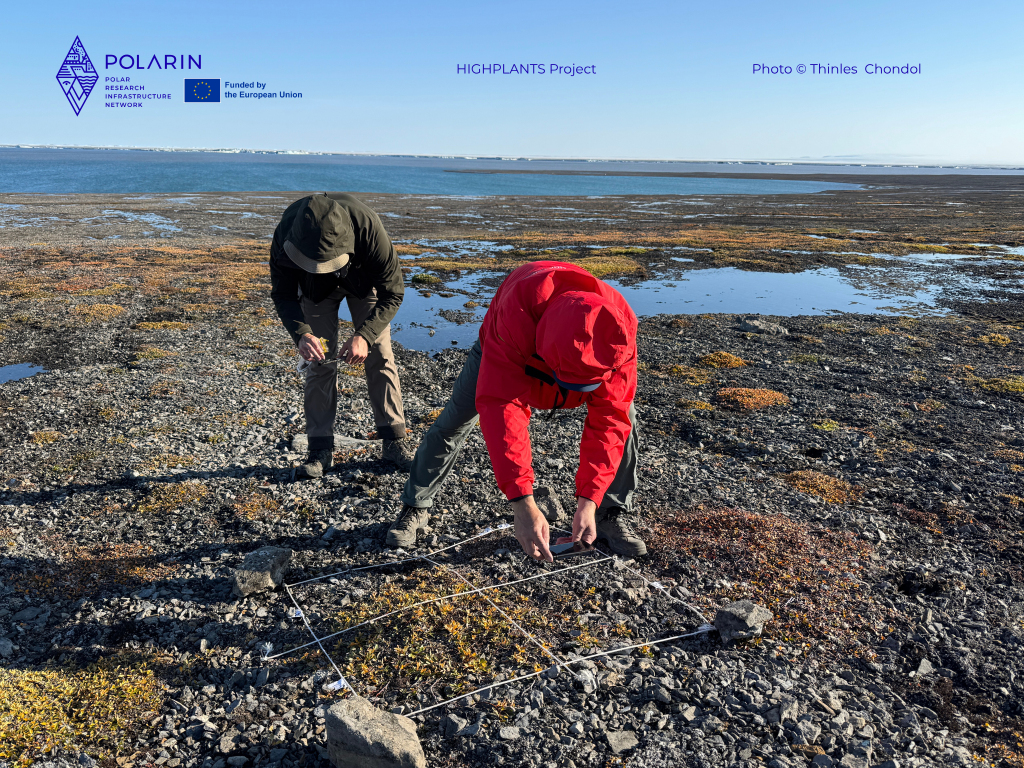
A hidden process shaping the tundra’s future​ Tiny shifts beneath our feet are quietly reshaping the Arctic tundra. In a new POLARIN Ambassador blog, Yajie Zhu from the University of St Andrews takes readers to northern Finland to explore how subtle variations in soil nutrients and microtopography influence vegetation across one of the world’s fastest-changing ecosystems.   During June 2025, the USNA-PL research team travelled to the Kilpisjärvi Biological Station, at the meeting point of Finland, Sweden, and Norway, to carry out fieldwork supported by POLARIN’s first call on Transnational Access to Research Infrastructures. Working along the slopes of Mount Saana, the team investigated how small differences in elevation, moisture, and soil chemistry shape the mosaic of mosses, lichens, and plants that define the tundra landscape.   From installing in situ nutrient sensors and soil probes to flying drones that captured fine-scale patterns invisible to satellites, the field campaign combined careful ground observations with high-resolution spatial data. Transects and quadrats laid out across the hillside allowed researchers to follow gradual changes from dry ridges to wetter hollows, revealing how closely vegetation responds to local soil conditions.   In the blog, Zhu reflects on the challenges and rewards of Arctic fieldwork, highlighting how field data, while imperfect, bring models and satellite observations to life by grounding them in real landscapes. The data collected during the field trip form the foundation for the next phase of the USNA-PL project, which aims to enhance understanding on how Arctic soil nutrient availability is represented from plot to landscape scales.   Read the full story in A hidden process shaping the tundra’s future by Yajie Zhu, POLARIN Ambassador and researcher at the University of St Andrews.   USNA-PL was funded by POLARIN’s first call for Transnational Access to Research Infrastructures.

News

The scoop on SCOOP –  New POLARIN Ambassador Blog Post!

The scoop on SCOOP The researchers Eva Doting (Postdoc at the Norwegian Institute for Nature Research Tromsø, Visiting Scholar at the University of Pennsylvania), and Anne Kellerman (Research Associate at the University of Pennsylvania, Visiting Scholar at the Florida State University) recently completed a High Arctic field campaign in Ny-Ålesund, Svalbard and the NERC Arctic Research Station, tracking how meltwater from retreating glaciers carries carbon and nutrients from ice to fjord.   As part of the POLARIN funded project SCOOP (Sources and Cycling Of Organic matter along glacial-proglacial-fjord flow Paths), they sampled supraglacial streams, proglacial rivers, and fjord waters around Austre Brøggerbreen and Midtre Lovénbreen, capturing how newly exposed soils and melting ice are reshaping the flow of life-supporting elements into the Arctic Ocean. Back in the lab, the team began analyzing how microbes break down this glacier-derived organic matter and nitrogen, helping reveal how Arctic fjord ecosystems may change as glaciers continue to retreat.   Step into the Arctic with Eva and Anne to discover how ice, soil, and sea are linked by climate change.   SCOOP was funded by POLARIN’s first call for Transnational Access to Research Infrastructures.

Scroll to Top