January 21, 2026

News

Deep Roots in Thawing Permafrost – New POLARIN Ambassador Visual story!

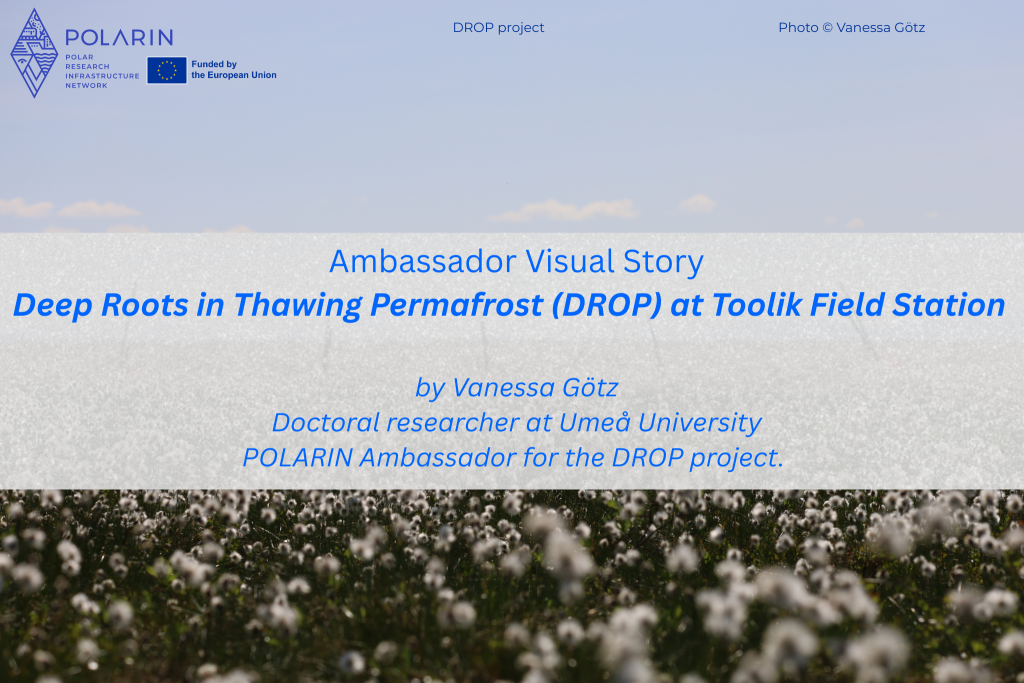
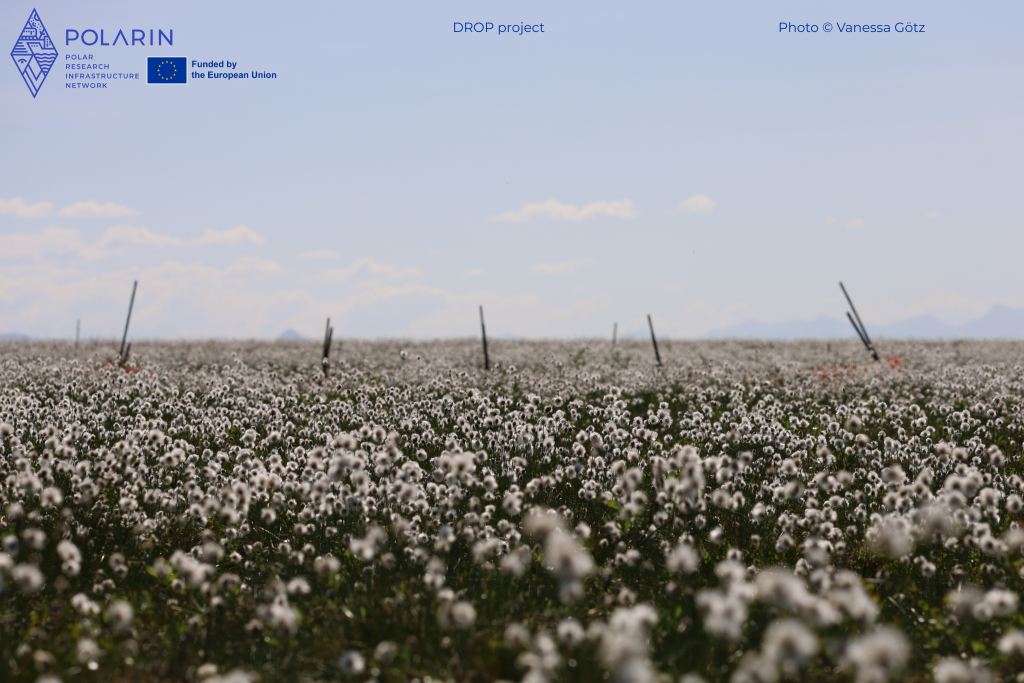
Deep Roots in Thawing Permafrost POLARIN has published a new Ambassador visual story titled Deep Roots in Thawing Permafrost (DROP) at the Toolik Field Station developed by the POLARIN Ambassador and doctoral researcher at Umeå University Vanessa Götz.   The story combines photographs and reflections from the field with insights into the experimental work carried out at the Toolik Field Station in northern Alaska. The aim of the project is to investigate how plant rooting behaviour responds to warming conditions in tundra ecosystems through in-situ experiments and observations.  Alongside the science, Vanessa shares her experiences working in the Arctic, from rapidly changing weather and mosquito-filled field days to encounters with wildlife and the striking light of the midnight sun, while acknowledging that the research takes place on the ancestral lands of Indigenous peoples.   Explore Vanessa’s visual story to learn more.   DROP  was one of the projects successfully selected through POLARIN’s first call for Transnational Access to Polar Research Infrastructures.
Ambassador

Deep Roots in Thawing Permafrost (DROP) at Toolik Field Station

Deep Roots in Thawing Permafrost (DROP) at Toolik Field Station A visual story by Vanessa Götz, POLARIN Ambassador and doctoral researcher at Umeå University.   In the Arctic, where temperatures are rising faster than anywhere else on Earth, some of the most important changes are happening out of sight. The Deep Roots in Thawing Permafrost (DROP) project focuses on the hidden processes belowground, investigating how plant roots and soils respond to warming conditions in Arctic tundra ecosystems. Funded through POLARIN’s first Transnational Access call, the project was carried out at Toolik Field Station in northern Alaska during the summer of 2025, combining long-term field experiments with hands-on observations from the tundra.   Through a visual field story, Vanessa Götz, POLARIN Ambassador and doctoral researcher at Umeå University, offers us a glimpse into her daily life and field research in the High Arctic. From warming experiments and plant-removal plots to encounters with wildlife, wildfire smoke, and sudden summer snowfall, the visual story captures both the scientific urgency and human experience of Arctic fieldwork. By highlighting how changes belowground may influence carbon storage and future climate feedbacks, DROP helps connect local tundra processes to global warming and environmental change.   DROP  was one of the projects successfully selected through POLARIN’s first call for Transnational Access to Polar Research Infrastructures. Download
News

Beyond the Bite: Mapping Arctic Mosquito Viromes with a Mobile Sequencing Lab​​​- New POLARIN Ambassador Blog Post!

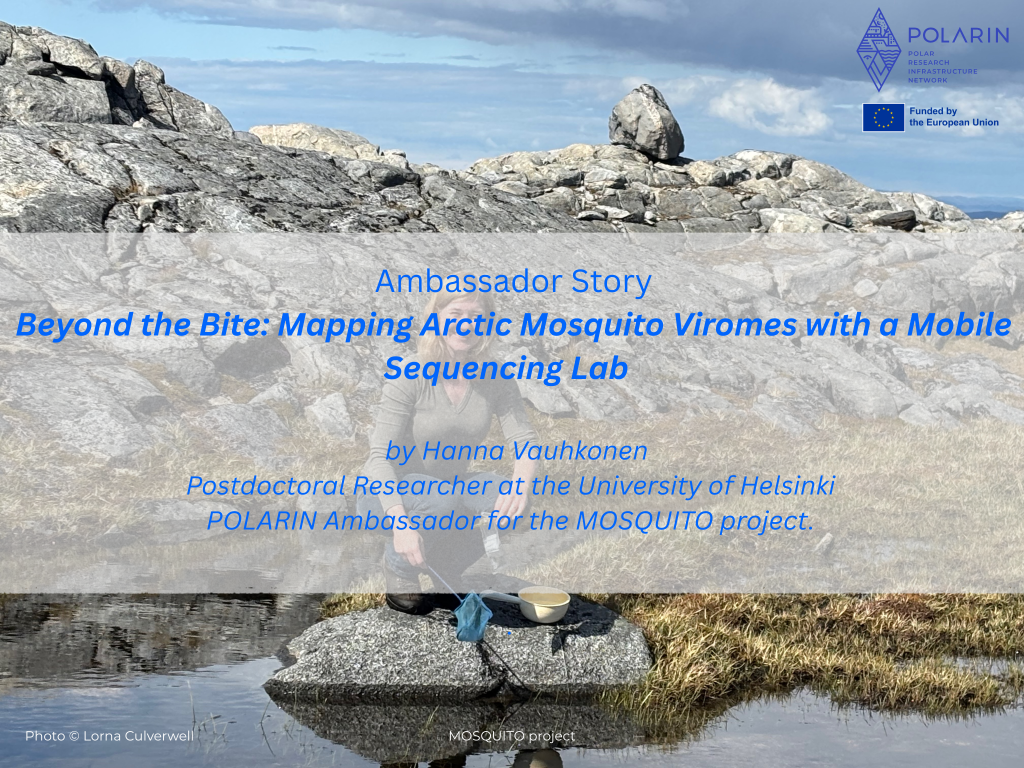
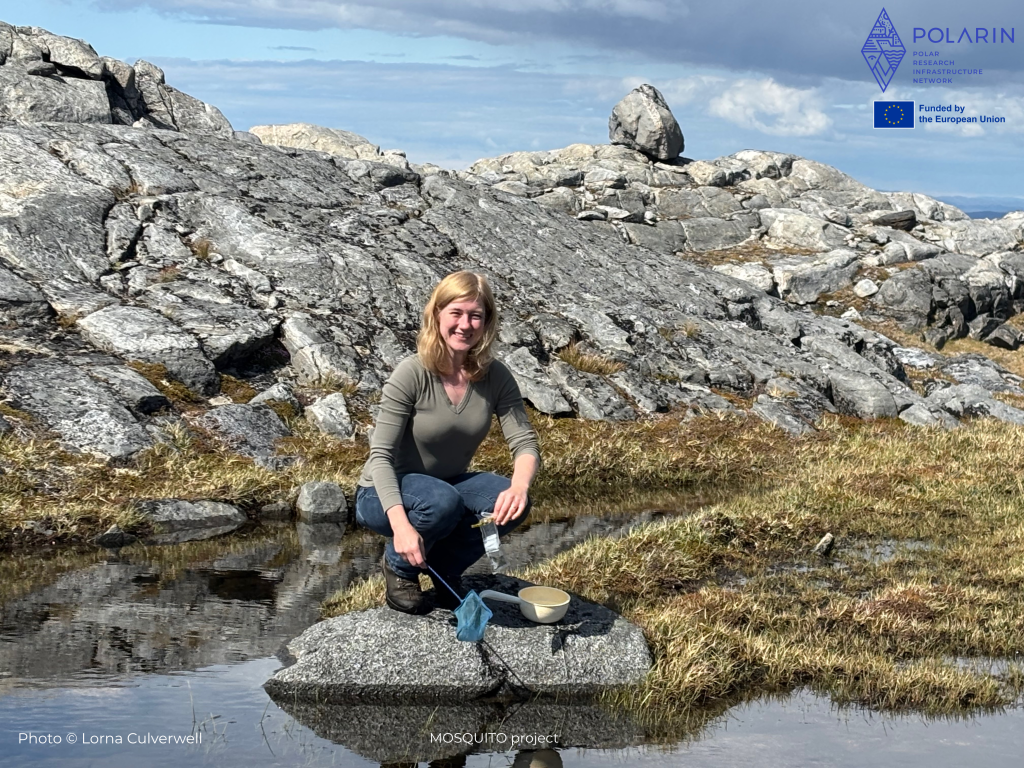
Beyond the Bite: Mapping Arctic Mosquito Viromes with a Mobile Sequencing Lab What does it take to sequence mosquito viruses in remote Arctic environments?   In a new POLARIN Ambassador blog, Hanna Vauhkonen from the University of Helsinki shares the story of the MOSQUITO project’s field campaign in Greenland, where researchers combined field sampling with mobile sequencing technologies under typical Arctic research conditions. The project was funding by POLARIN’s first call on Transnational Access to polar research infrastructures.   Working from Nuuk and the Kobbefjord Research Station, the team carried out mosquito sampling and off-grid sequencing. Working from a mobile laboratory packed into cabin-size luggage, the researchers collected both larval and adult mosquitoes, adapting their sampling strategy to a delayed mosquito season and unpredictable weather. With solar panels, a backup generator, and offline sequencing software, the team successfully ran multiple Nanopore MinION sequencing experiments in the field even after flight cancellations, power outages, and long days of careful sample processing.   Despite logistical challenges, the results were striking. The team detected more than 50 virus taxa, including highly divergent and potentially endemic species, revealing a previously hidden layer of Arctic biodiversity. Differences between mosquito species highlighted how even simple Arctic ecosystems can host complex, host-specific viral communities.   In her blog, Hanna Vauhkonen reflects on the realities of Arctic fieldwork, from troubleshooting equipment during sequencing runs to enjoying moments of quiet in the fjord landscape after long hours in the lab. The experience underscores the importance of field-based observations and local reference databases for understanding how polar ecosystems, and their microbial networks, may respond to a warming climate.

Ambassador

Beyond the Bite: Mapping Arctic Mosquito Viromes with a Mobile Sequencing Lab

Beyond the Bite: Mapping Arctic Mosquito Viromes with a Mobile Sequencing Lab by Hanna Vauhkonen, Postdoctoral Researcher at the University of Helsinki and POLARIN Ambassador for the MOSQUITO project.   In July 2025, researchers from the University of Helsinki travelled to Nuuk and the remote Kobbefjord Research Station in Greenland as part of the MOSQUITO project, supported by POLARIN’s Transnational Access programme. Led by POLARIN Ambassador Hanna Vauhkonen, the team set out to map mosquito and virus communities and to test off-grid sequencing technologies under true Arctic field conditions.   Working with a fully mobile laboratory and offline bioinformatics tools, the researchers collected and sequenced mosquito samples despite flight disruptions, limited power supply, and the absence of traditional laboratory infrastructure. The field campaign revealed a rich and largely undocumented diversity of mosquito-associated viruses, highlighting the importance of local reference databases and ground-based observations for understanding Arctic ecosystems.   Read more in the MOSQUITO Ambassador blog by Hanna Vauhkonen, Postdoctoral Researcher at the University of Helsinki and POLARIN Ambassador for the MOSQUITO project.   MOSQUITO received funding from POLARIN’s first call for Transnational Access to Research Infrastructures.   Download

Scroll to Top