
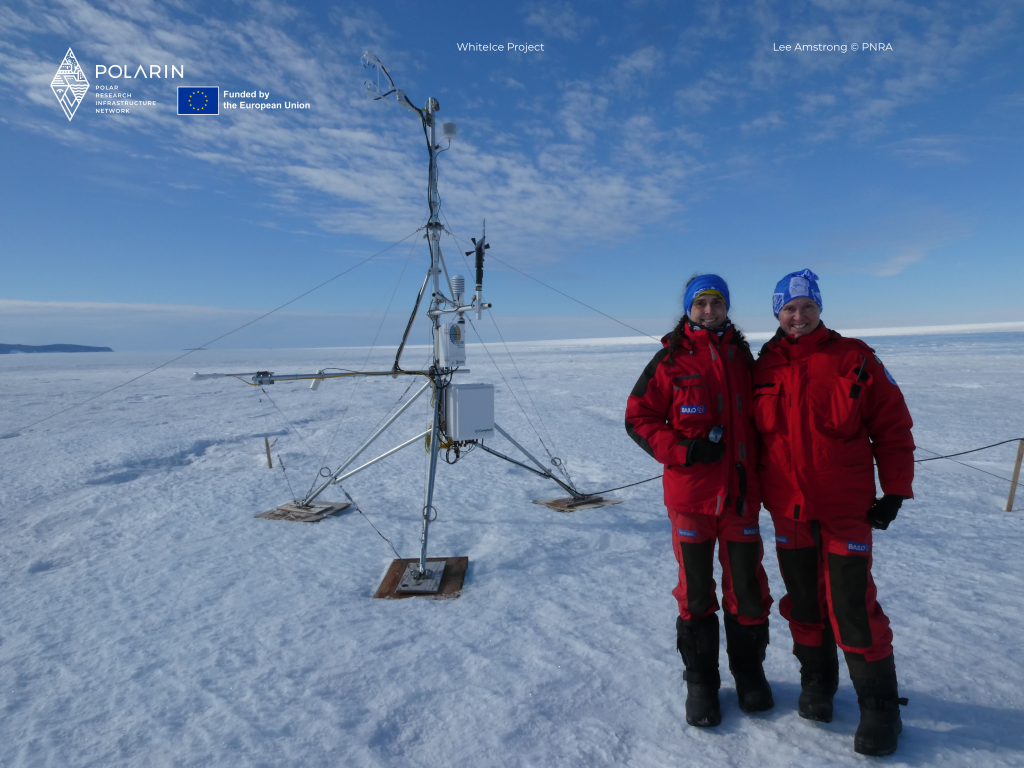
WhiteIce in Antarctica: Investigating the Surface Scattering Layer
WhiteIce in Antarctica: Investigating the Surface Scattering Layer Understanding how the Antarctic ice surface interacts with the atmosphere is essential for improving climate models. During the 2024–2025 field season, POLARIN Ambassador and Doctoral Researcher at the Lausanne WSL Institute for Snow and avalanche Research SLF, Anja Mödl and colleagues travelled to Mario Zucchelli Station in East Antarctica to investigate the formation of the surface scattering layer (SSL). Supported by POLARIN’s first call for Transnational Access to polar research infrastructures, the research team installed automatic weather stations and conducted detailed manual surface measurements on the Nansen Ice Shelf, located about 37 km from the station. Their goal was to better understand how melting processes transform the ice surface and how these changes influence the surface energy balance. The SSL forms when bare ice begins to melt and meltwater percolates downward and evaporates. What remains is a granular layer of ice crystals that resembles snow but is actually transformed ice. Understanding how this layer forms and evolves is important for representing ice surface processes more accurately in global climate models. Despite some challenges, the campaign provided valuable observations of surface processes on the Antarctic ice shelf. Alongside their measurements, the team also experienced the unique Antarctic environment. Hiking around the spectacular landscapes around Terra Nova Bay they encounter Adélie penguins, seals and skuas near the station. Read more in the WhiteIce Ambassador visual story by Anja Mödl, Doctoral Researcher at the Lausanne WSL Institute for Snow and avalanche Research SLF and POLARIN Ambassador. Download