HIGHPLANTS: From high Himalayas to high Arctic
A field story from Thinles CHONDOL, PhD, Postdoc, Institute of Botany of the Czech Academy of Sciences, Czechia and POLARIN Ambassador.
In this story, Thinles shares experience of conducting fieldwork at Villum Research Station (Station Nord) in northeastern Greenland, one of the world’s most remote Arctic research stations. Through the HIGHPLANTS project, the research team from the Institute of Botany of the Czech Academy of Sciences and the University of South Bohemia explored how plants survive and function under extreme environmental conditions by comparing the High Arctic with the high-altitude deserts of the Himalayas.
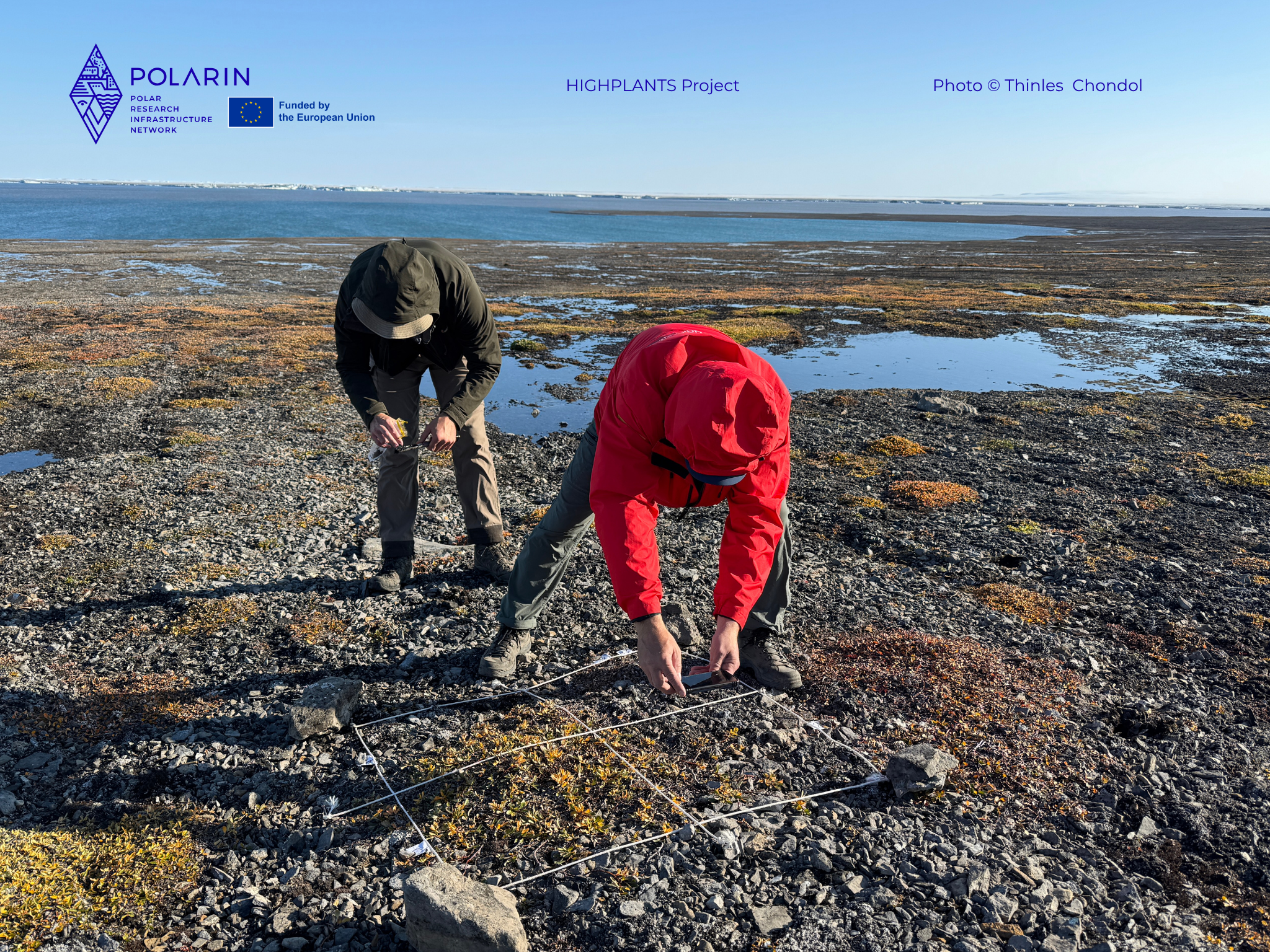
During their POLARIN-supported field campaign, the researchers established vegetation plots, measured the photochemical performance of dominant Arctic plant species, and collected soil samples for microbial and physicochemical analyses. Working under the midnight sun, changing weather, blizzards and strong winds, they experienced first-hand the challenges and rewards of conducting research in the High Arctic.
The story also reflects on the striking similarities between the Arctic and Himalayan cold deserts, and on how plants adapt to low temperatures, short growing seasons and environmental stress. By bringing these two geographically distant ecosystems together, HIGHPLANTS aims to better understand plant strategies in extreme environments and how they may respond to rapid climate change.
HIGHPLANTS was one of the projects supported through POLARIN’s first Transnational Access to polar research infrastructure call.