Ambassador

Ambassador

A hidden process shaping the tundra’s future​

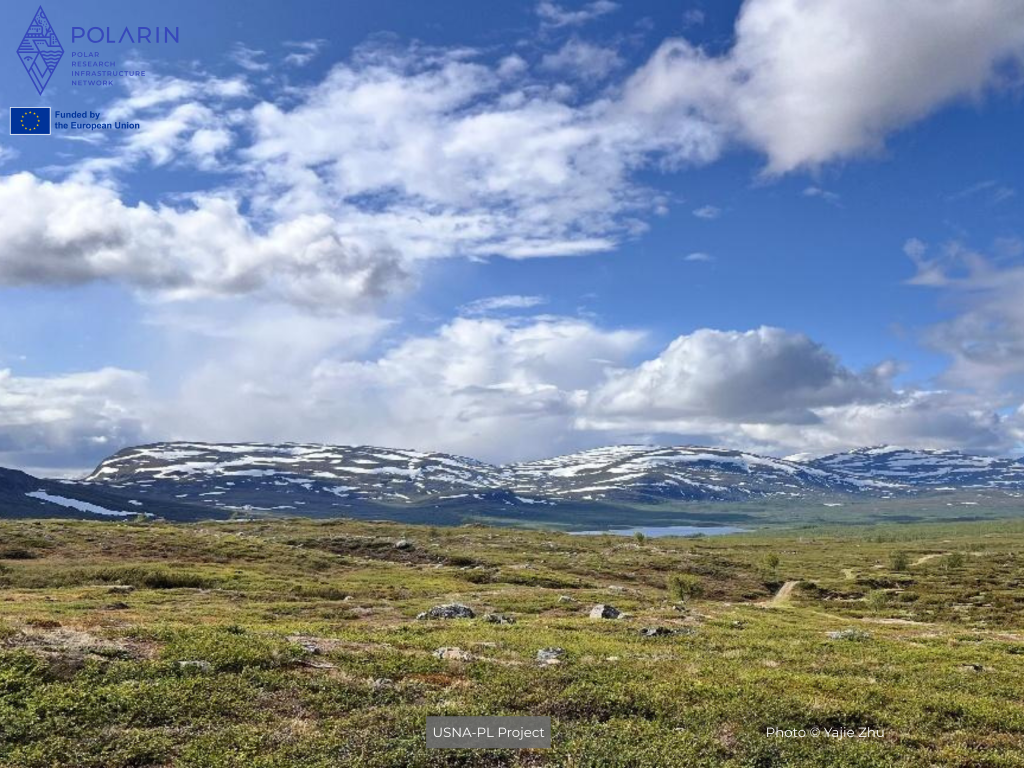
A hidden process shaping the tundra’s future by Yajie Zhu, PhD researcher at the University of St Andrews and POLARIN Ambassador for the USNA-PL project.   In summer 2025, researchers from the University of St Andrews travelled to Kilpisjärvi in northern Finland as part of the USNA-PL project, supported by POLARIN’s Transnational Access programme. Working from the Kilpisjärvi Biological Station and across the slopes of Mount Saana, the team explored how fine-scale differences in soil nutrients and microtopography shape tundra vegetation.   Through detailed field surveys, in situ sensors, and drone mapping, the researchers captured patterns that are often invisible to satellites but crucial for understanding how tundra ecosystems respond to climate change. The work highlights the importance of ground-based observations in highly fragmented Arctic landscapes and provides essential data for improving land-surface models. Read more in A hidden process shaping the tundra’s future, the Ambassador blog by Yajie Zhu, PhD researcher at the University of St Andrews and POLARIN Ambassador for the USNA-PL project.   USNA-PL  was one of the projects successfully selected through POLARIN’s first call.    Download

Ambassador

The scoop on SCOOP – A High Arctic fieldwork project funded by POLARIN

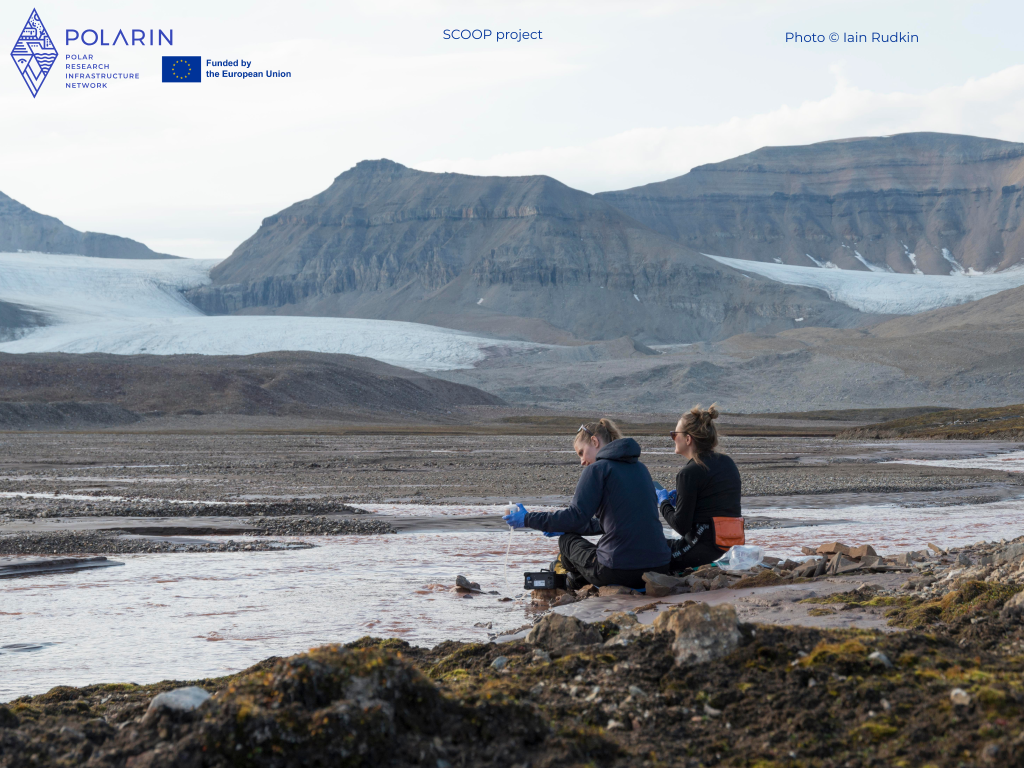
The scoop on SCOOP – A High Arctic fieldwork project funded by POLARIN by Ambassadors Eva Doting, Postdoc at the Norwegian Institute for Nature Research Tromsø, Visiting Scholar at the University of Pennsylvania,   and Anne Kellerman Research Associate at the University of Pennsylvania, Visiting Scholar at the Florida State University.   In summer 2025, the researchers Eva Doting and Anne Kellerman traced Arctic meltwater from glacier ice to fjord in Ny-Ålesund, Svalbard, to better understand how carbon and nutrients move through rapidly changing polar landscapes. Working through the POLARIN-funded SCOOP project, the team sampled water and sediments along the flow paths of Austre Brøggerbreen and Midtre Lovénbreen, capturing how glacier retreat is reshaping connections between land and sea.   By analyzing these samples in the lab, Eva and Anne are now revealing how melting ice and newly exposed soils influence the supply of organic matter to Arctic fjords and help us better predicting how coastal arctic ecosystems will respond to a warming climate.   Read more in the SCOOP fieldwork blog by the POLARIN Ambassadors Eva Doting and Anne Kellerman.   SCOOP  was one of the projects successfully selected through POLARIN’s first call.  Download

Ambassador

Following Microscopic Life Through the Glacier Melt Season

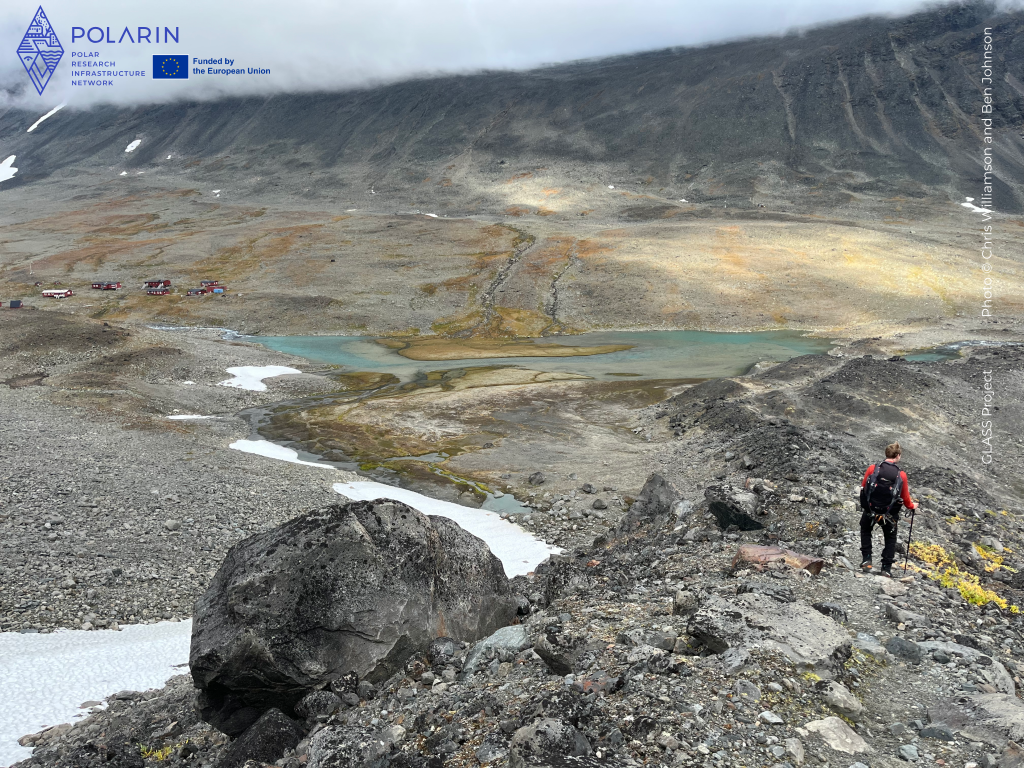
Following Microscopic Life Through the Glacier Melt Season by Ben Johnson PhD student at Bristol University and POLARIN Ambassador for the “GLASS” project.   In summer 2025, scientists from the University of Bristol travelled to northern Sweden to study life on glacier surfaces as part of the GLASS (Glacier Algal Sampling Strategies) project, funded by POLARIN’s first call for Transnational Access to Research Infrastructures.   Working from Tarfala Research Station, the team followed microscopic glacier algae on Storglaciären through the melt season. In July, a short Scandinavian heatwave briefly accelerated snowmelt around the research station, revealing colourful algal blooms in nearby snowpacks. By August, much of the glacier surface was exposed, allowing detailed sampling and drone surveys to capture the bloom at its peak. The final visit in September documented how these algal communities changed as the melt season came to an end. Together, the work helps improve understanding of how blooms are structured across ice surfaces and how they should sampled for more representative upscaling to satellite imagery, needed to monitor biological activity across the cryosphere in a warming climate.   Read more in the GLASS fieldwork blog by Ben Johnson, PhD student at Bristol University and POLARIN Ambassador for the GLASS project.   GLASS  was one of the projects successfully selected through POLARIN’s first call. Download

Ambassador

Ponds of Utqiaġvik: Exploring Hidden Life in Arctic Alaska

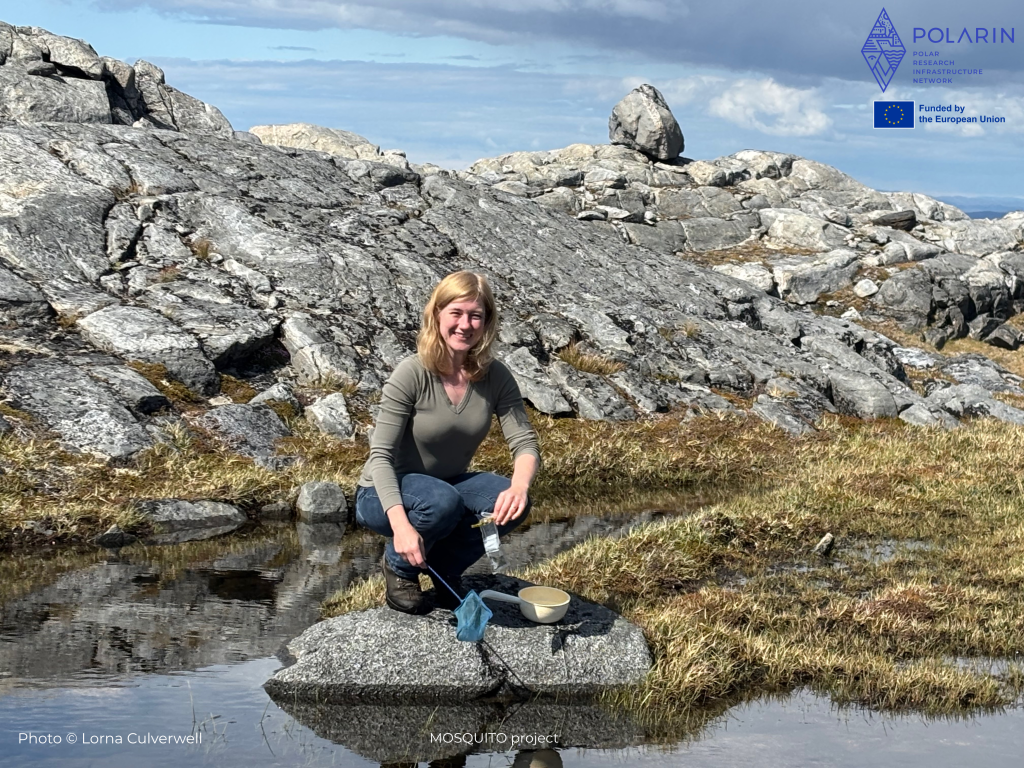
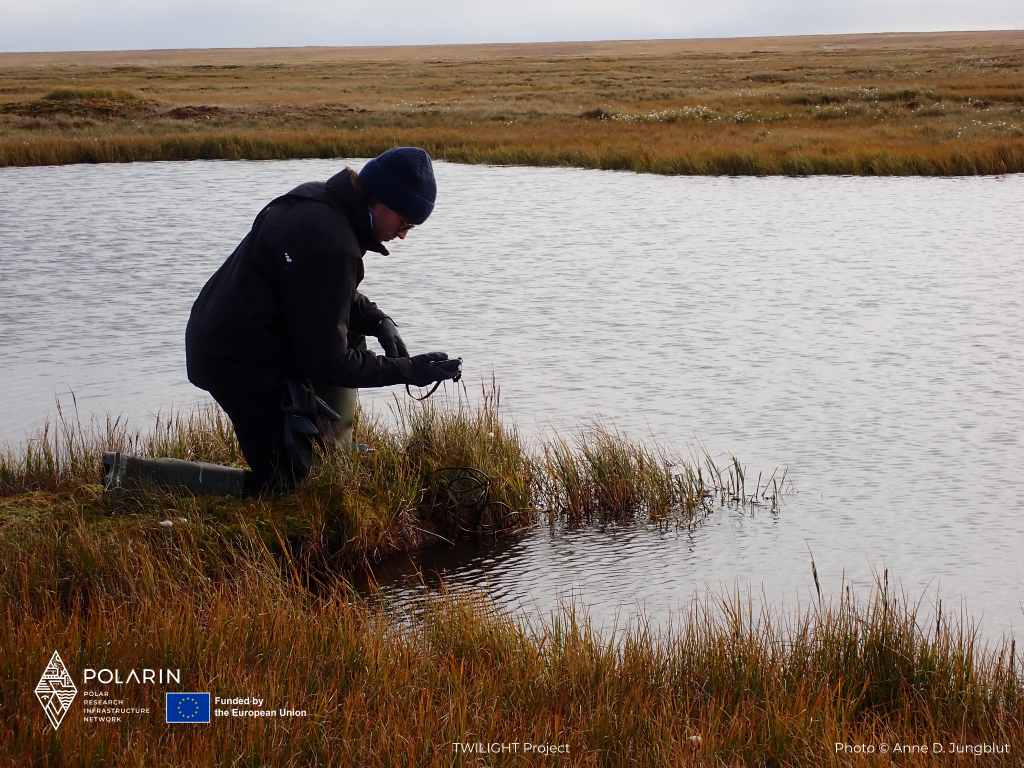
Ponds of Utqiaġvik: Exploring Hidden Life in Arctic Alaska By Archie Clarkson PhD student at Exeter University and National History Museum of London, POLARIN Ambassador for the “TWILIGHT” project.   “Utqiaġvik is a wonderfully peaceful place to conduct fieldwork, and I hope that one day I might have the opportunity to return to experience it all over again.”   Archie Clarkson travelled to Utqiaġvik, Alaska to explore the tiny but important life hidden in the Arctic’s thaw ponds. Using the research station from the POLARIN network Barrow Arctic Research Center and the support from the POLARIN and BARC,  he spent a week collecting water samples, measuring pond conditions, and discovering the surprising diversity of protists: microscopic organisms that keep Arctic ecosystems running. The research stay offered not only exciting science, but also moments of connection with the Iñupiat community and the coastal tundra landscape. Archie returned home with samples now being studied through DNA sequencing and microscopy at the National History Museum of London, helping reveal how these resilient microbes survive long, dark winters and how a warming climate may reshape their world.   Discover the full journey by reading Archie’s Ambassador story. The TWILIGHT was one of the projects successfully selected through POLARIN’s first call. Download

Ambassador

It is Getting Hot in Here (TEMPNET POLARIN project)

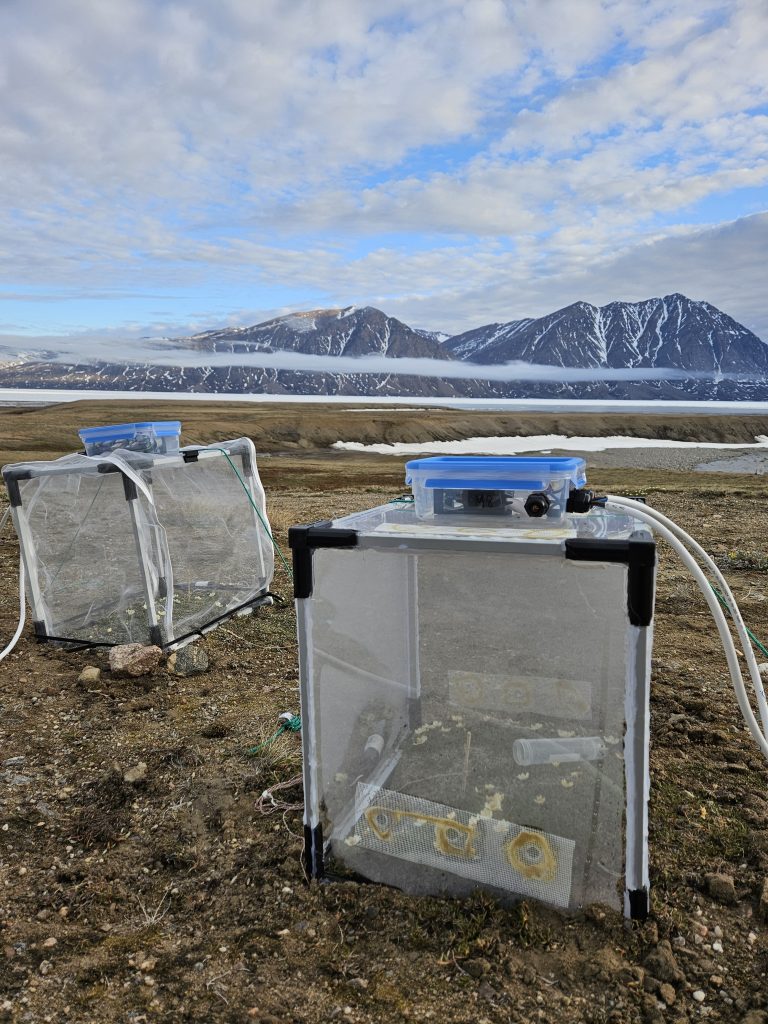
It is Getting Hot in Here by Dr. Patricia Kaye Dumandan “TEMPNET” Project PI and POLARIN Ambassador Swedish University of Agricultural Sciences   When Dr. Patricia Dumandan arrived in Zackenberg expecting typical Arctic cold, an unexpected July heatwave instead set the stage for a deeper look into how warming shapes insect behavior and species interactions. Working in Nuuk and Zackenberg, she and her TEMPNET team carried out ecophysiological tests using improvised field setups and installed mesocosm boxes to observe how species like wolf spiders and flies behave and interact under different temperatures. Early results already show surprising responses, such as wolf spiders sprinting at temperatures beyond their thermal limits, hinting that rising Arctic temperatures may alter ecological interactions in unforeseen ways. With almost five hundreds of gigabytes of imagery still to analyze, the project is only beginning to reveal what warming truly means for the Arctic’s insects and their interconnected communities.   Dive deeper into this research through Patricia’s vlog article for the POLARIN Ambassador Programme. TEMPNET was one of the projects successfully selected through POLARIN’s first call. Download

Scroll to Top