News

News

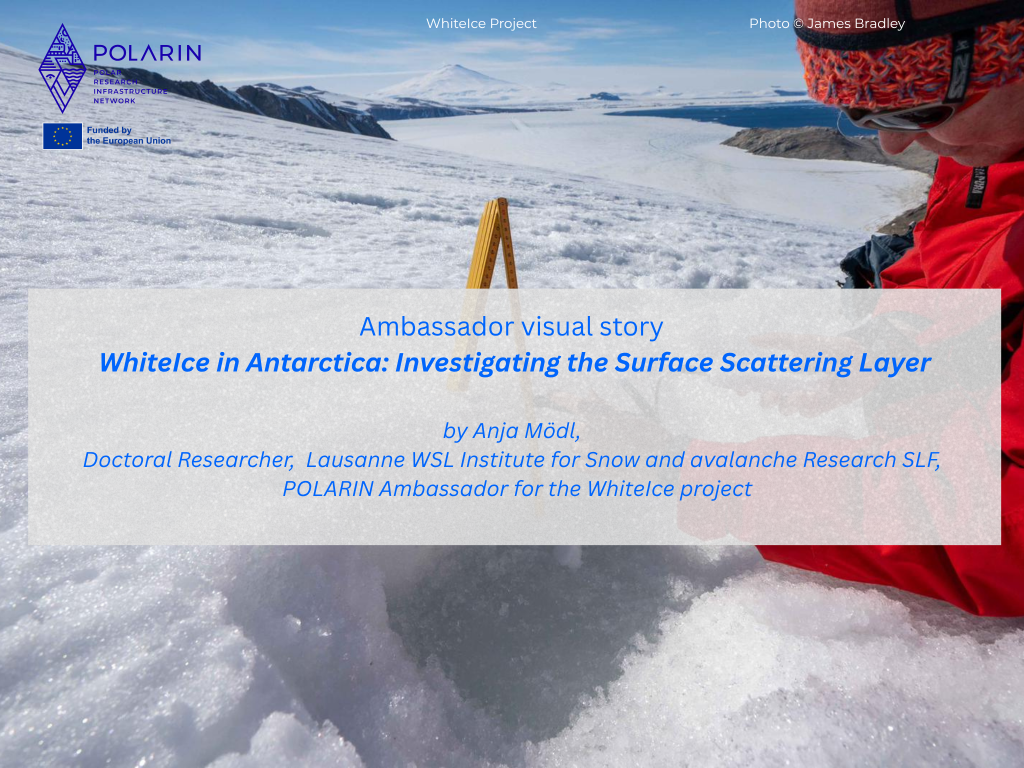
A hidden process shaping the tundra’s future​​​- New POLARIN Ambassador Blog Post!

A hidden process shaping the tundra’s future​ Tiny shifts beneath our feet are quietly reshaping the Arctic tundra. In a new POLARIN Ambassador blog, Yajie Zhu from the University of St Andrews takes readers to northern Finland to explore how subtle variations in soil nutrients and microtopography influence vegetation across one of the world’s fastest-changing ecosystems.   During June 2025, the USNA-PL research team travelled to the Kilpisjärvi Biological Station, at the meeting point of Finland, Sweden, and Norway, to carry out fieldwork supported by POLARIN’s first call on Transnational Access to Research Infrastructures. Working along the slopes of Mount Saana, the team investigated how small differences in elevation, moisture, and soil chemistry shape the mosaic of mosses, lichens, and plants that define the tundra landscape.   From installing in situ nutrient sensors and soil probes to flying drones that captured fine-scale patterns invisible to satellites, the field campaign combined careful ground observations with high-resolution spatial data. Transects and quadrats laid out across the hillside allowed researchers to follow gradual changes from dry ridges to wetter hollows, revealing how closely vegetation responds to local soil conditions.   In the blog, Zhu reflects on the challenges and rewards of Arctic fieldwork, highlighting how field data, while imperfect, bring models and satellite observations to life by grounding them in real landscapes. The data collected during the field trip form the foundation for the next phase of the USNA-PL project, which aims to enhance understanding on how Arctic soil nutrient availability is represented from plot to landscape scales.   Read the full story in A hidden process shaping the tundra’s future by Yajie Zhu, POLARIN Ambassador and researcher at the University of St Andrews.   USNA-PL was funded by POLARIN’s first call for Transnational Access to Research Infrastructures.

News

The scoop on SCOOP –  New POLARIN Ambassador Blog Post!

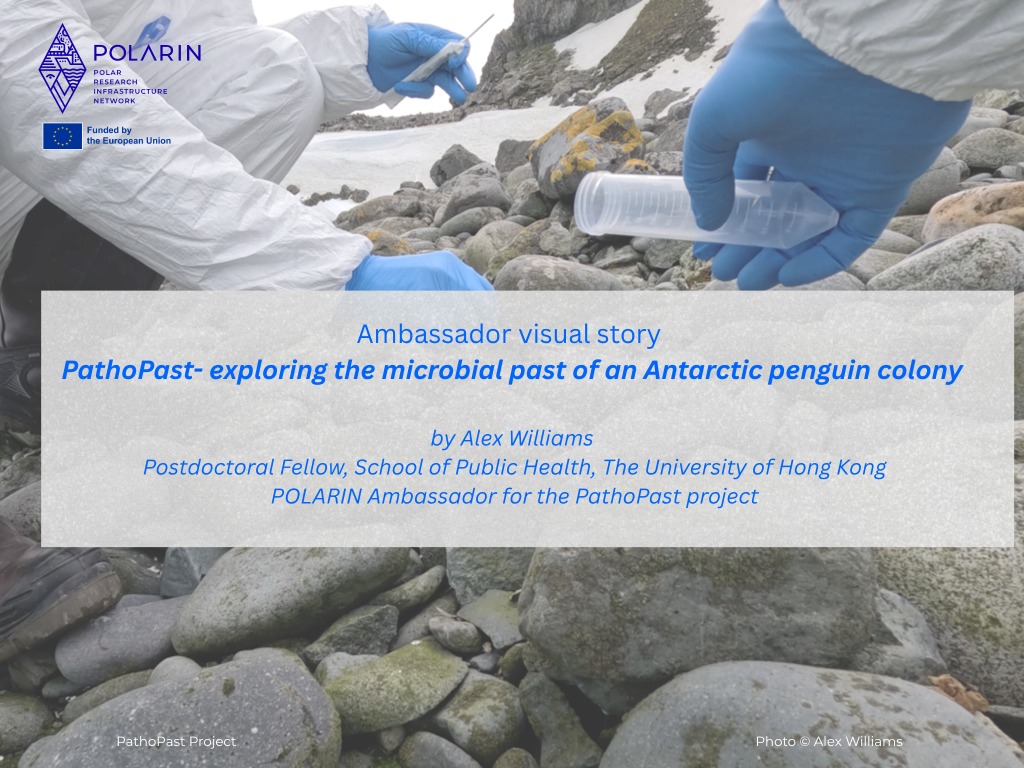
The scoop on SCOOP The researchers Eva Doting (Postdoc at the Norwegian Institute for Nature Research Tromsø, Visiting Scholar at the University of Pennsylvania), and Anne Kellerman (Research Associate at the University of Pennsylvania, Visiting Scholar at the Florida State University) recently completed a High Arctic field campaign in Ny-Ålesund, Svalbard and the NERC Arctic Research Station, tracking how meltwater from retreating glaciers carries carbon and nutrients from ice to fjord.   As part of the POLARIN funded project SCOOP (Sources and Cycling Of Organic matter along glacial-proglacial-fjord flow Paths), they sampled supraglacial streams, proglacial rivers, and fjord waters around Austre Brøggerbreen and Midtre Lovénbreen, capturing how newly exposed soils and melting ice are reshaping the flow of life-supporting elements into the Arctic Ocean. Back in the lab, the team began analyzing how microbes break down this glacier-derived organic matter and nitrogen, helping reveal how Arctic fjord ecosystems may change as glaciers continue to retreat.   Step into the Arctic with Eva and Anne to discover how ice, soil, and sea are linked by climate change.   SCOOP was funded by POLARIN’s first call for Transnational Access to Research Infrastructures.

News

Following Microscopic Life Through the Glacier Melt Season –  New POLARIN Ambassador Blog Post!

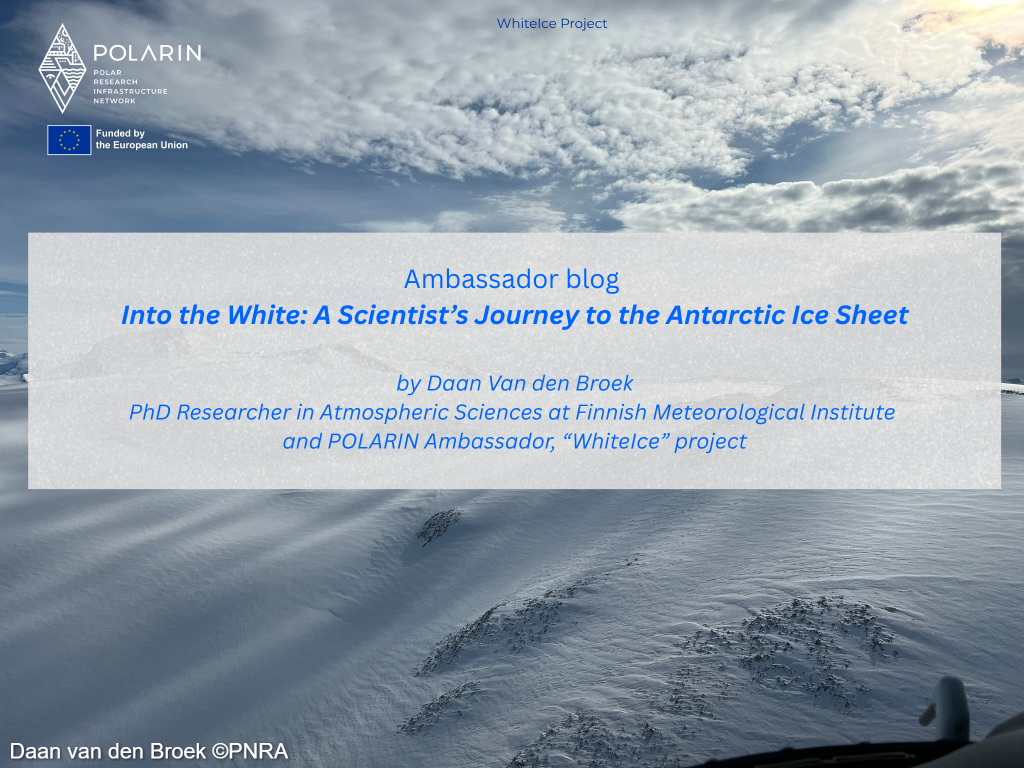
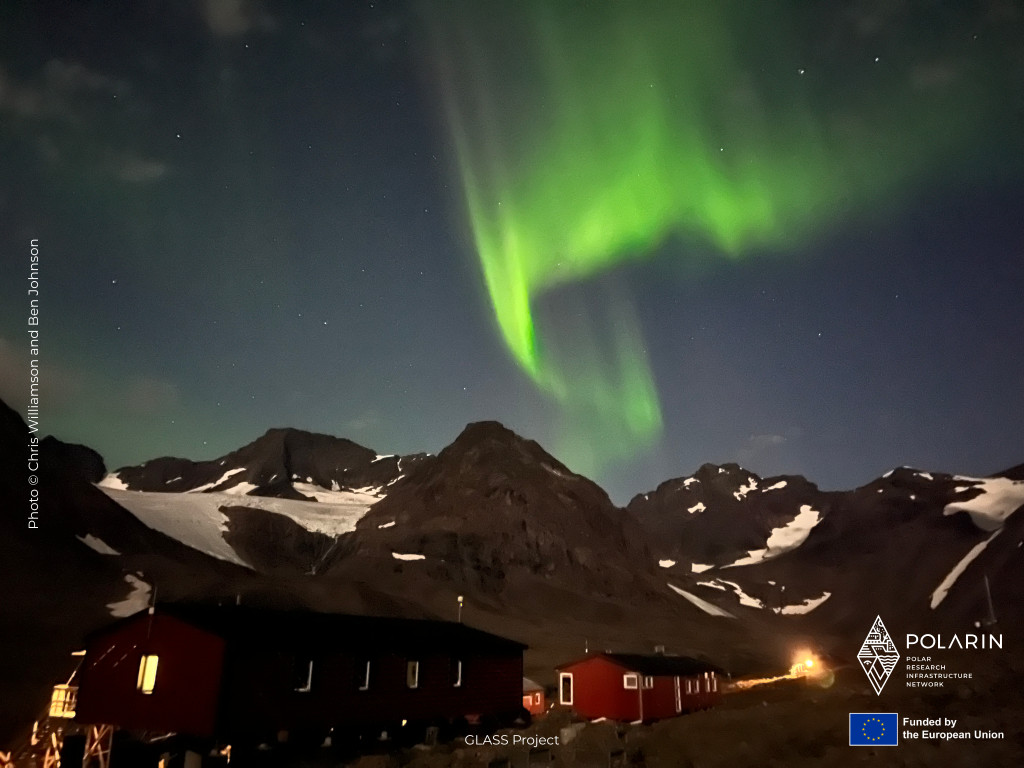
Following Microscopic Life Through the Glacier Melt Season-  New POLARIN Ambassador Blog Post! In summer 2025, the GLASS (Glacier Algal Sampling Strategies) project from the University of Bristol headed to Tarfala Research Station in northern Sweden to study blooms of microscopic algae on Storglaciären through the melt season.   A heatwave in July brought melting around the station and uncovered colourful algal patches in the snow, giving the team an early glimpse of life on the ice. By August, the bare glacier surface allowed detailed sampling and drone surveys that captured the peak of the bloom, and a final visit in September captured how these ecosystems had evolved by the end of the melt season. These field campaigns are helping scientists build the datasets needed to improve how satellites observe biological activity onglaciers in a warming world.   Read more in the GLASS fieldwork blog by Ben Johnson, PhD student at Bristol University and POLARIN Ambassador for the GLASS project.   GLASS was funded by POLARIN’s first call for Transnational Access to Research Infrastructures.

News

Ponds of Utqiaġvik: Exploring Hidden Life in Arctic Alaska-  New POLARIN Ambassador Blog Post!

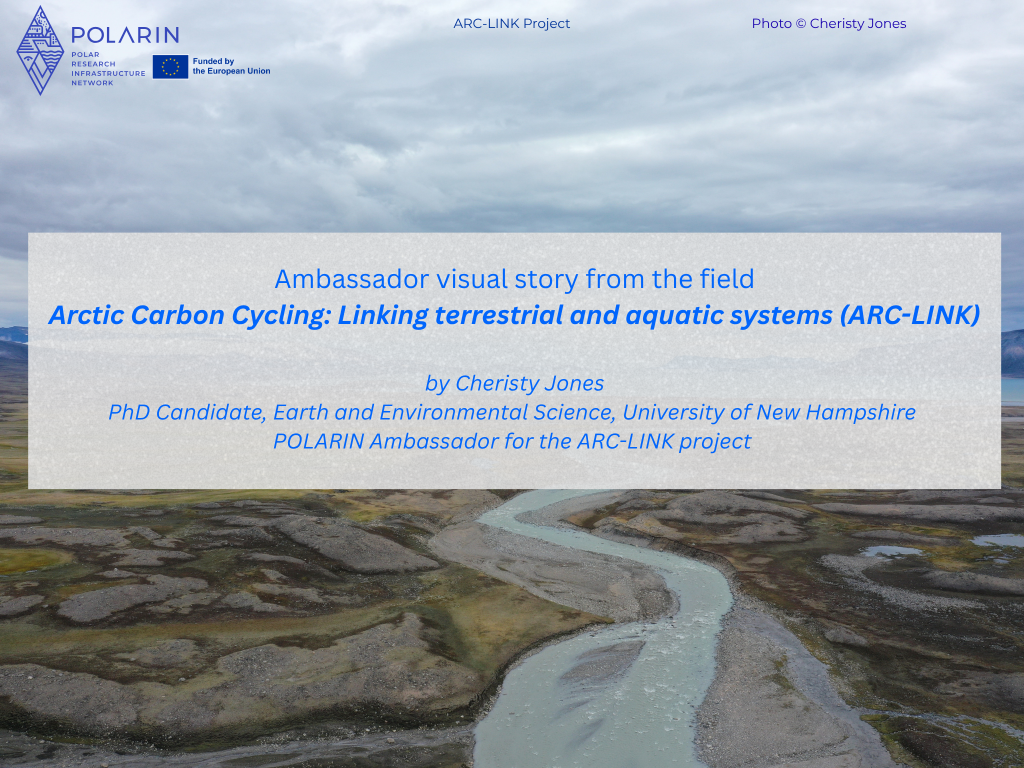
Ponds of Utqiaġvik: Exploring Hidden Life in Arctic Alaska-  New POLARIN Ambassador Blog Post! “Utqiaġvik is a wonderfully peaceful place to conduct fieldwork, and I hope that one day I might have the opportunity to return to experience it all over again.”   Dive into the story of Archie Clarkson, a PhD student at the University of Exeter and a POLARIN Ambassador for the TWILIGHT Project, as he shares how POLARIN supported his research in Utqiaġvik, Alaska. His mission: to explore the tiny yet vital organisms living in Arctic ponds: protists.   With POLARIN’s support, Archie spent a week at the Barrow Arctic Research Center, where he collected water samples, measured pond conditions, and uncovered the surprising diversity of microscopic protists that keeps Arctic ecosystems functioning.   Read the full blog post here: Ponds of Utqiaġvik: Exploring Hidden Life in Arctic Alaska – POLARIN The TWILIGHT project was one of the first to be selected through POLARIN’s initial call.    

News

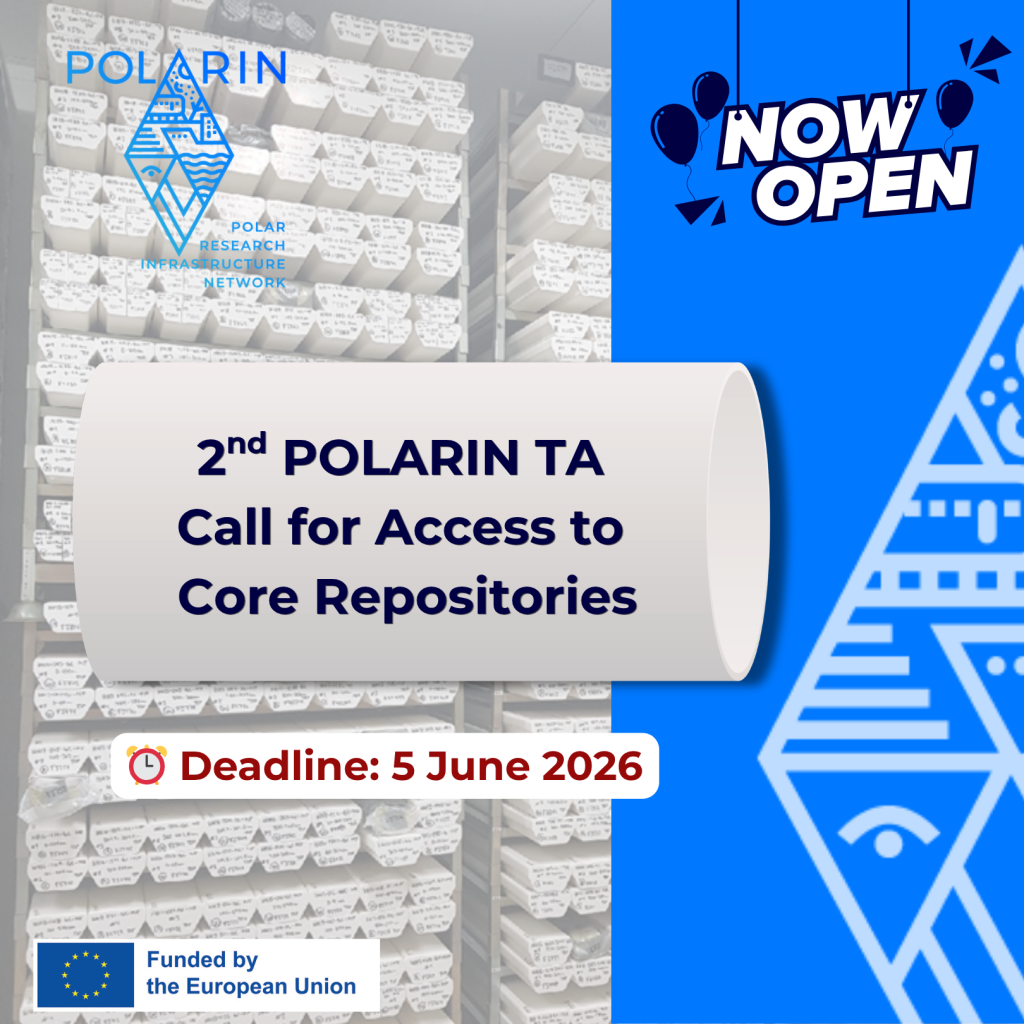
POLARIN Launches First TA Call for Access to Core Repositories

POLARIN Launches First TA Call for Access to Core Repositories The POLARIN project will open its first Transnational Access (TA) Call for Access to Core Repositories on 15 December. POLARIN has four core repositories in its network: UiT CORES, BAS-PSCF, AWI-SED, AWI-ICE. In this first call, access will be offered to two repositories: UiT CORES and BAS-PSCF. Researchers seeking access to POLARIN’s core repository sample collections will have until 13 February to submit their applications. Following the submission deadline, applications will undergo an assessment carried out by the Research Infrastructure (RI) operators between February and March. Final results and access decisions are expected to be made public by the end of March. Applicants will be required to complete an online form providing essential project details, including the project title, summary, anticipated publications, alignment with POLARIN’s key research priorities, and proposed access dates for sample acquisition or shipment. In addition to the online form, the following documents must be uploaded as attachments: A sample request form The CV of the project leader A tentative Data Management Plan, which is a mandatory component under POLARIN guidelines Early Career Researchers (ECRs) applying for sample access will also need to include one to two recommendation letters from their academic supervisors. You can learn more about the call and how to apply here.

News

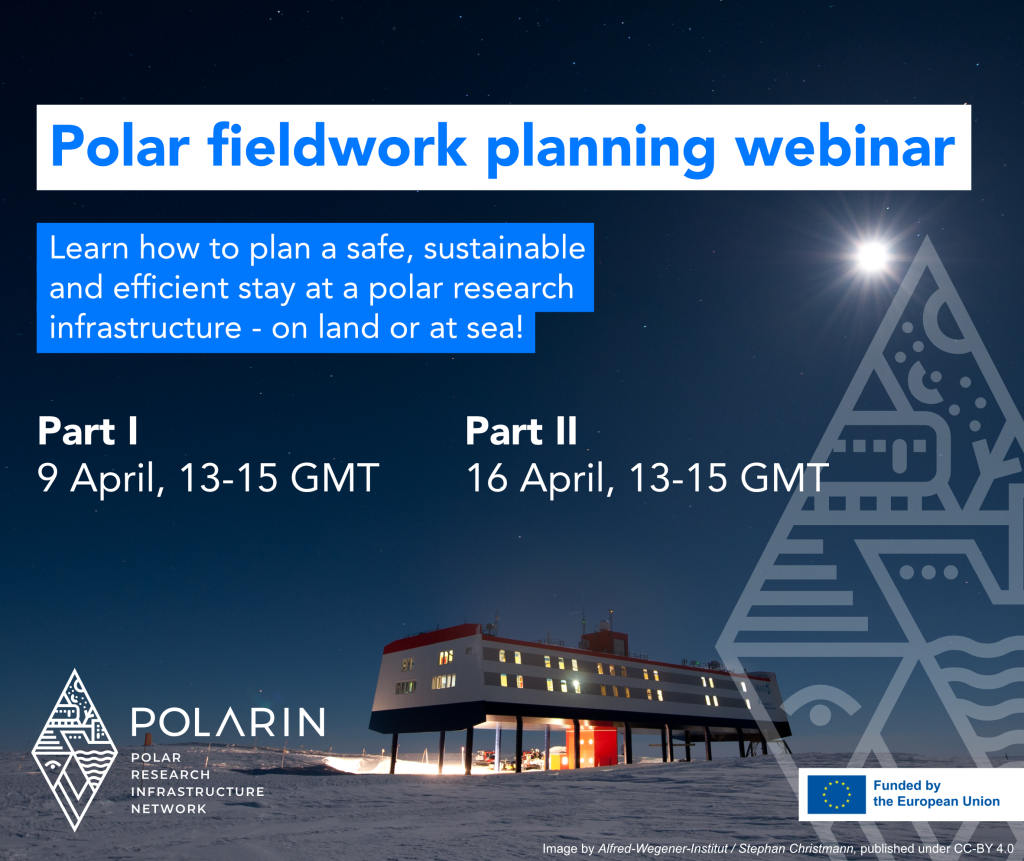
Recording of the “Polar Fieldwork Planning” Webinar Now Available

Recording of the “Polar Fieldwork Planning” Webinar Now Available Are you preparing for fieldwork in the Arctic or Antarctic? Whether you’re headed to land-based stations or embarking on polar research vessels, planning is key to a successful research campaign.   Watch this POLARIN fieldwork planning webinar to learn more about how to navigate permit processes and logistics challenges, understand risk assessment and field safety, implement ethical and sustainable research practices, and plan effective data management from the start.   This webinar will provide you with an overview on a variety of topics related to planning polar fieldwork: Introduction to the POLARIN project and its opportunities for researchers Best practices for planning your fieldwork, managing logistics, and ensuring team safety Insights into ethical research collaboration and community engagement in the Arctic Guidance on minimizing environmental impact and respecting cultural heritage Practical training on data stewardship, including the FAIR and CARE guiding principles, working with a data management plan Advice on media content creation and information about the POLARIN ambassador program Time for your questions and interaction with experts   The webinar was organised by the Association of Polar Early Career Scientists (APECS), the University of Copenhagen (UCPH), the National Institute of Oceanography and Applied Geophysics (OGS), the Svalbard Integrated Arctic Earth Observing System (SIOS), Aarhus University (AU), the National Research Council of Italy (CNR), ETT Solutions (ETT), and FL Polar Operation (FLPO) together with experts from the POLARIN project.    

News

 From Pole to Pole Across the Atlantic: POLARIN at the AAORIA Forum 2025

 From Pole to Pole Across the Atlantic: POLARIN at the AAORIA Forum 2025 On September 24, our Project Manager Veronica Willmott presented POLARIN at the side event “Polar oceans and climate: Advancing synergies for long-term global collaboration”, organized as part of the 2025 All-Atlantic Ocean Research and Innovation Alliance (AAORIA) Forum in Brussels. The Forum this year was hosted by the European Commission. During her presentation, Veronica highlighted POLARIN’s mission to provide free-of-charge transnational access to polar research infrastructures for scientists worldwide. The event concluded with a Call for Action to the AAORIA partners. Both the Call for Action and the meeting report can be accessed here. “An absolute success story in EU funding -the transnational access projects- not only in the poles, but also in the ocean and on land. Something that really brought us (scientists and experts), closer together.” Nicole Biebow at the AAORIA Forum 2025 On September 26, the forum session “Our Linkages with the Polar Seas” opened by Lena Buth, PhD student at AWI and POLARIN team member, who delivered an inspiring talk on the future of polar regions and polar research through the eyes of an early-career ocean professional. Her talk starts at 12:09:17 in the recording.   The project coordinator Nicole Biebow reflected on the challenges of sharing information and research infrastructures. She highlighted lessons from the first POLARIN call, which exceeded expectations with nearly 100 proposal submissions showcasing the importance of transnational access to research infrastructures. You can watch Nicole’s response in the session “Our linkages with the polar seas” at 12:40:38 in the recording. Finally, Nicole and Veronica had the opportunity to speak with James Morrison, the new Director for Healthy Planet at the European Commission on topics including polar research infrastructures.

News

“It is Getting Hot in Here” – New POLARIN Ambassador blog post online!

“It is Getting Hot in Here” – New POLARIN Ambassador blog post online! In “It is Getting Hot in Here”, Dr. Patricia Kaye Dumandan, PI of the POLARIN-funded TEMPNET project, gives an inside look at how her team set up experiments to understand how temperature shapes insect activity and species interactions in the Arctic.   Through POLARIN, Patricia and her team travelled to the Greenland Institute of Natural Resources in Nuuk and later to the Zackenberg Research Station in Greenland, where they built makeshift field laboratories, crafted creative experimental setups, and installed mesocosm boxes to capture how warming affects species interactions.   An inside look at the hands-on work behind studying a rapidly warming environment.Read the blog here.  

News

2nd POLARIN Transnational Access Call – Thank You to all applicants!

Thank You for Your Proposals to the 2nd POLARIN Transnational Access Call We would like to thank everyone who submitted their proposal to the 2nd POLARIN Transnational Access (TA) Call! In total, we received 104 proposals across 40 Research Infrastructures. Altogether, 4,489 access units were requested by 296 users, including 4,040 in-person and 449 remote access units. The proposals will now go through an eligibility check, followed by a scientific evaluation of all eligible applications. Access decisions will be announced by mid-March 2026. Thank you once again to all applicants for your enthusiasm and contributions to polar research through the POLARIN Research Infrastructure network!

News

Recording of POLARIN’s Information Webinar for TA Users Now Available​

Recording of POLARIN’s Information Webinar for TA Users Now Available On 18 September 2025, POLARIN hosted a webinar for Transnational Access (TA) users, providing researchers with key insights into the project and its research infrastructures. The event placed a special focus on the 2nd POLARIN TA Call, which opened on 1 September and will run until 30 October 2025.   The session opened with welcoming remarks from Hannele Savela, POLARIN TA Coordinator at the University of Oulu. This was followed by an introduction to the POLARIN project and its activities, presented by Veronica Willmott-Puig, POLARIN Project Manager at AWI.   Hannele then outlined the guidelines for applicants to the 2nd Transnational Access call, covering access modalities, eligibility criteria, priorities, data policy, and the application process. Attendees also received a practical demonstration of the POLARIN TAP online application platform, introduced by Vanessa Spadetto, POLARIN TA Assistant at INTERACT.   The webinar concluded with an interactive Q&A session, allowing researchers to clarify their questions before submitting applications. A full recording of the webinar is available on POLARIN’s YouTube channel.   Related articles: POLARIN Opens Second Transnational Access Call for Polar Research    Interview: Unlocking the Poles – POLARIN’s 2nd Call for Transnational Access to Polar Research Infrastructures in the Arctic and Antarctic   Recording of POLARIN’s 2nd TA Call Brokerage Event Now Available    Join the POLARIN Expert Pool – Support the Evaluation of the 2nd Call for Proposals

News

Join Our September 18 Information Webinar for POLARIN TA Users

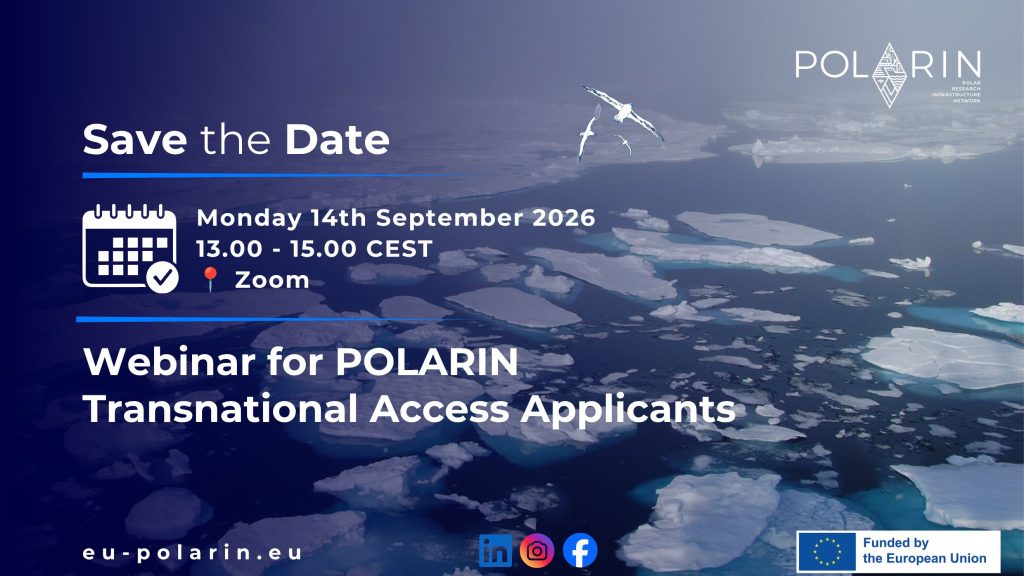
Join Our September 18 Information Webinar for POLARIN TA Users Date and time: Thursday 18th September 2025, 10.30-12.00 CEST Zoom link:  https://oulu.zoom.us/j/69306892467   POLARIN will host a webinar for Transnational Access (TA) users on Thursday, 18 September 2025, from 10:30 to 12:00 CEST via Zoom link.   The session will introduce participants to the POLARIN project and its research infrastructures, with a focus on the 2nd POLARIN TA Call, which opened on 1 September and runs until 30 October 2025 (16:00 CEST).   The webinar will offer practical guidance on access modalities, priorities, eligibility criteria, data policy, and the application process. It will also feature an introduction of the POLARIN TAP online application platform and conclude with a Q&A session, giving participants the chance to clarify questions before applying.   This webinar is an opportunity for researchers interested in polar science to learn more about accessing world-class infrastructures through POLARIN.   PROGRAMME 10.30-10.45 Introduction to POLARIN project and activities (Veronica Willmott-Puig, POLARIN Project Manager, AWI)   10.45-11.20 2nd POLARIN Transnational Access call: guidelines for applicants (Hannele Savela, POLARIN TA Coordinator, University of Oulu)   11.20-11.35 Introduction to the POLARIN TAP on-line application platform (Vanessa Spadetto, POLARIN TA Assistant, INTERACT)   11.35-12.00 Questions and Answers   Related links: If you missed POLARIN’s 2nd TA Call Brokerage Event on September 2, the full recording is now available, featuring insights into the TA programme, participating research infrastructures, and the new POLARIN GIS tool.

News

Recording of POLARIN’s 2nd TA Call Brokerage Event Now Available

Recording of POLARIN’s 2nd TA Call Brokerage Event Now Available On September 2, 2025, POLARIN hosted a successful brokerage event for its Second Transnational Access (TA) Call. Researchers learnt how the TA programme enables free access to Arctic and Antarctic polar research infrastructures, both on-site and remotely. Highlights from the event included an overview of the POLARIN project and its second TA Call, presentations of selected polar research infrastructures in the Arctic and Antarctic, and a first look at the new POLARIN Geographic Information System (GIS), mapping 38 research stations into one interactive tool.  We are grateful to our speakers for their inspiring presentations: Veronica Willmott Puig, Hannele Savela, Andrii Fedchuk, Alejandro Font, Megan Clampitt, Amie Jackson, Niels Hoedeman, Leivur Janus Hansen, Christina Alsvik Pedersen, Elmer Topp-Jørgensen. The recording of the event is available here.    The 2nd POLARIN TA Call is open until October 30, 2025. Don’t miss the opportunity to apply and gain access to polar research infrastructures free of charge. Information Webinar – September 18 To support the polar research community, POLARIN is also organizing an information webinar on September 18, 10:30–12:00 CEST. The seminar will cover the application and evaluation process, as well as the principles of Transnational Access. A dedicated Q&A session will give participants the opportunity to address specific queries. The webinar can be accessed via this link.

News

POLARIN Opens Second Transnational Access Call for Polar Research

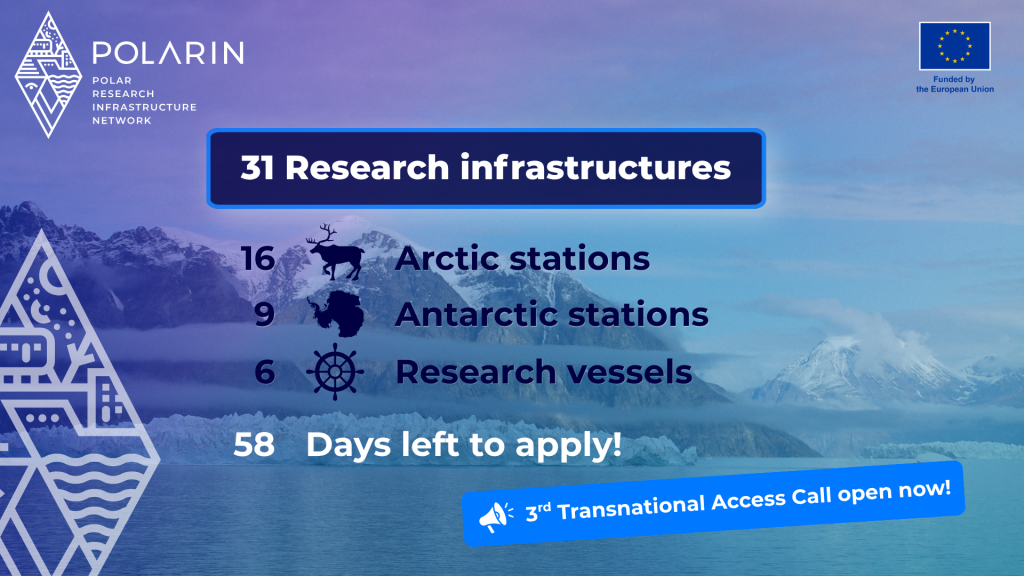
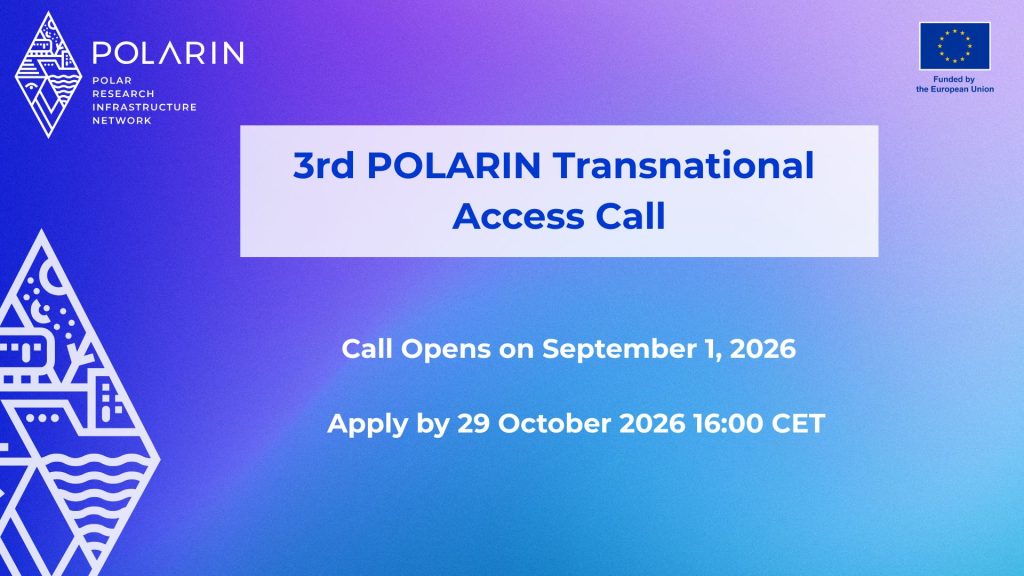
POLARIN Opens Second Transnational Access Call for Polar Research Today, we are excited to announce the opening of POLARIN’s second Transnational Access (TA) Call, offering researchers the opportunity to apply for free access to 42 polar research infrastructures in the Arctic and Antarctic. Applicants are invited to align their proposals with at least one of POLARIN’s seven priority research themes: Sea Ice and Polar Oceans in the Climate System Polar Ice Sheets, Glaciers, and Sea Level Terrestrial Carbon Cycle and Permafrost Polar Ecosystems and Biodiversity Atmosphere Dynamics and Chemistry Paleoclimate Processes and Variability Humans, Societies, and Global Changes Key Dates and Application Process The call is now open, with proposals due by October 30, 2025, at 16:00 CET. Successful applicants will be notified in mid-March 2026, with project negotiations expected to follow in April 2026. Support for Applicants To help researchers prepare their submissions, POLARIN is hosting two online events: Brokerage Event – September 2, 2025 (15:00–17:00 CEST): The event will provide and an overview of the POLARIN project and its Transnational Access Calls, highlight some of the offered research infrastructures and briefly introduce the new POLARIN Geographic Information System (GIS). Learn more and register here. Information Webinar for Applicants – September 18, 2025 (10:30–12:00 CEST): The seminar will cover the application and evaluation process, as well as the principles of Transnational Access. A dedicated Q&A session will give participants the opportunity to address specific queries. The webinar can be accessed via this link: https://oulu.zoom.us/j/69306892467. Why It Matters POLARIN’s TA programme offers both in-person and remote access to cutting-edge facilities, lowering barriers for global researchers and strengthening international collaboration in polar science. The project’s first TA call attracted nearly 100 proposals, highlighting the strong demand for open access to polar research infrastructures and reinforcing POLARIN’s leadership in advancing climate and environmental science at the poles. Learn more about POLARIN’s second TA call here.

News

POLARIN Launches New GIS Platform for Polar Research Planning

POLARIN Launches New GIS Platform for Polar Research Planning  “The POLARIN GIS is designed to empower researchers by providing a dynamic, user-friendly platform that centralizes information about polar research stations. Our vision is to streamline polar research facility metadata and strengthen international scientific cooperation across the network.”  Elmer Topp-Jørgensen, Special Advisor at Aarhus University and coordinator of the POLARIN GIS developments Today, POLARIN officially launches its Geographic Information System (GIS) platform, designed to transform the planning and coordination of polar research activities. POLARIN GIS is an online tool that allows institutions to share detailed information about polar research infrastructure and their surrounding environments. The platform will feature data on 38 arctic and antarctic research stations within the POLARIN network. Scientists can use POLARIN GIS to:  Search for stations that suit specific research needs for a POLARIN TA project. Read all about the individual research stations where they intend to apply for POLARIN TA. Find links to station websites, contact information, etc. to inquire about feasibility of proposed POLARIN TA projects. Managers and staff can directly access and edit the information, ensuring that scientists are informed of the latest updates. The launch of POLARIN GIS marks a significant step toward more integrated and data-driven polar research operations. “This GIS platform represents a major milestone for POLARIN. It not only enhances how we coordinate research activities but also strengthens the collaboration between our partner institutions. By providing a centralized, accessible, and customizable tool, we are setting the foundation for more efficient and impactful polar research in the years to come.”  Veronica Willmott Puig, Alfred-Wegener-Institut Helmholtz-Zentrum für Polar- und Meeresforschung, POLARIN Project Manager  A short presentation of the POLARIN GIS will take place during the POLARIN Brokerage Event for the 2nd Transnational Access Call on September 2 (15:00–17:00 CEST). Interested participants can register here.

News

One Week Until the POLARIN Brokerage Event for the 2nd Transnational Access Call

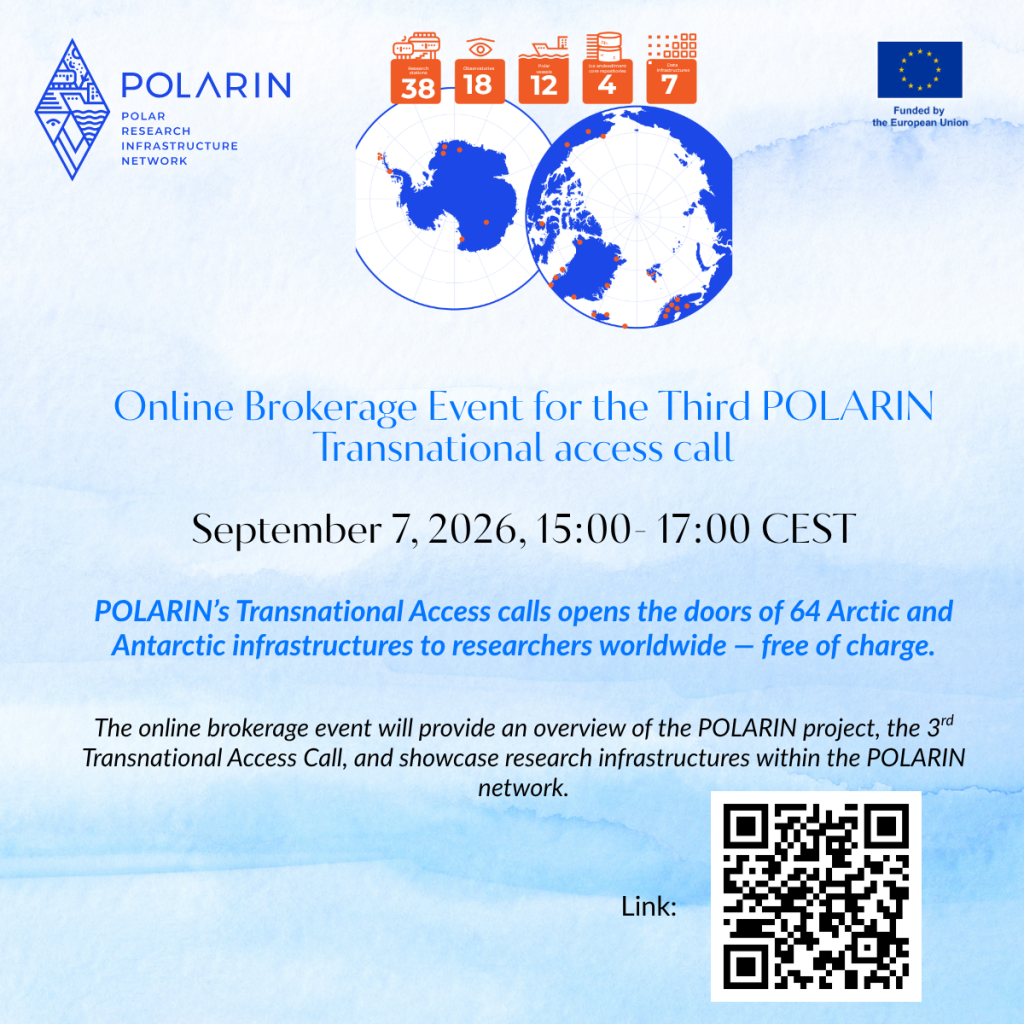
One Week Until the POLARIN Brokerage Event for the 2nd Transnational Access Call Registration Agenda (pdf) On September 2, 2025 (15:00–17:00 CEST), POLARIN will host a brokerage event for its Second Transnational Access (TA) Call to polar research infrastructures. The finalized agenda is now available. The TA programme offers researchers worldwide free access to 64 Arctic and Antarctic infrastructures. Access can be either in person (hands on), with selected users visiting installations to carry out research, or remote, through services such as provision of reference materials, samples, or access to high performance computing facilities. The September 2 event will: Provide an overview of the POLARIN project and its Transnational Access Calls Highlight selected research infrastructures from the 64 available Introduce the new POLARIN Geographic Information System (GIS) Registration Agenda (pdf) Key Dates for the 2nd POLARIN Transnational Access Call September 1, 2025 – Call opens October 30, 2025 (16:00 CET) – Call closes Mid-March 2026 – Access decisions communicated April 2026 – Negotiations with successful projects begin Related Upcoming Events: To support the polar research community, POLARIN is also organizing an information webinar on September 18, 10:30–13:00 CEST. The seminar will cover the application and evaluation process, as well as the principles of Transnational Access. A dedicated Q&A session will give participants the opportunity to address specific queries. The webinar can be accessed via this link: https://oulu.zoom.us/j/69306892467. Expert Pool: POLARIN is inviting experts to join its Expert Pool, contributing to the review of proposals submitted under the Transnational Access calls. Interested individuals are encouraged to register and indicate their field of expertise here.

News

POLARIN Brokerage Event for its 2nd Transnational Access Call to Polar Research Infrastructures: Agenda & Registration Open

POLARIN Brokerage Event for its 2nd Transnational Access Call to Polar Research Infrastructures: Agenda & Registration Open   Registration Agenda (pdf)   On September 2, 2025 (15:00–17:00 CEST), POLARIN will host a brokerage event for its Second Transnational Access (TA) Call to polar research infrastructures. The finalized agenda is now available. The TA programme offers researchers worldwide free access to 64 Arctic and Antarctic infrastructures. Access can be either in person (hands on), with selected users visiting installations to carry out research, or remote, through services such as provision of reference materials, samples, or access to high performance computing facilities.     The September 2 event will: Provide an overview of the POLARIN project and its Transnational Access Calls Highlight selected research infrastructures from the 64 available Introduce the new POLARIN Geographic Information System (GIS) Registration Agenda (pdf) Key Dates for the 2nd POLARIN Transnational Access Call September 1, 2025 – Call opens October 30, 2025 (16:00 CET) – Call closes Mid-March 2026 – Access decisions communicated April 2026 – Negotiations with successful projects begin Related Upcoming Events: To support the polar research community, POLARIN is also organizing an information webinar on September 18, 10:30–13:00 CEST. The seminar will cover the application and evaluation process, as well as the principles of Transnational Access. A dedicated Q&A session will give participants the opportunity to address specific queries. The webinar can be accessed via this link: https://oulu.zoom.us/j/69306892467#success.   Expert Pool: POLARIN is inviting experts to join its Expert Pool, contributing to the review of proposals submitted under the Transnational Access calls. Interested individuals are encouraged to register and indicate their field of expertise here.

News

POLARIN presented at the 37th COMNAP Annual Meeting in Warsaw

POLARIN presented at the 37th COMNAP Annual Meeting in Warsaw The 37th Annual Meeting of the Council of Managers of National Antarctic Programs (COMNAP) and the 21st COMNAP Symposium were held from August 5–8 in Warsaw, Poland, bringing together leaders and experts dedicated to advancing Antarctic science and operations. On August 8, Dr. Nicole Biebow, Coordinator of the POLARIN project, presented an overview of the initiative’s objectives. Her presentation highlighted two upcoming milestones: the opening of the second POLARIN Transnational Call on September 1, and the launch of the POLARIN Geographic Information System (GIS) on the same date. COMNAP, established in 1988, is an international association that coordinates and supports Antarctic operations among governmental National Antarctic Programs. Its 33 member programs represent nearly all scientific and logistical activity in Antarctica. These programs are tasked with conducting and enabling research in the Antarctic Treaty Area on behalf of their respective governments, ensuring that data from the region is shared globally in the spirit of international cooperation. You can find more information about COMNAP here.  

News

POLARIN Brokerage Event and Webinar on the Upcoming 2nd Transnational Access Call

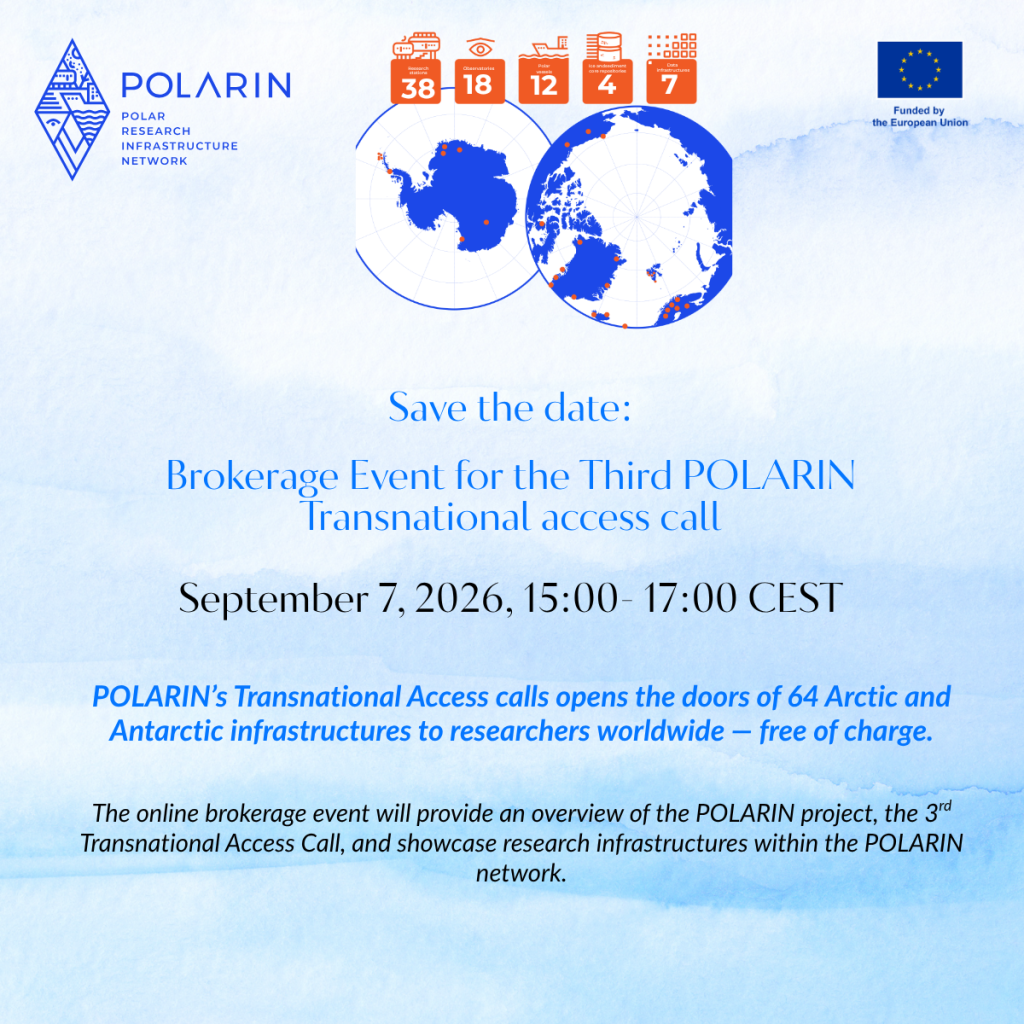
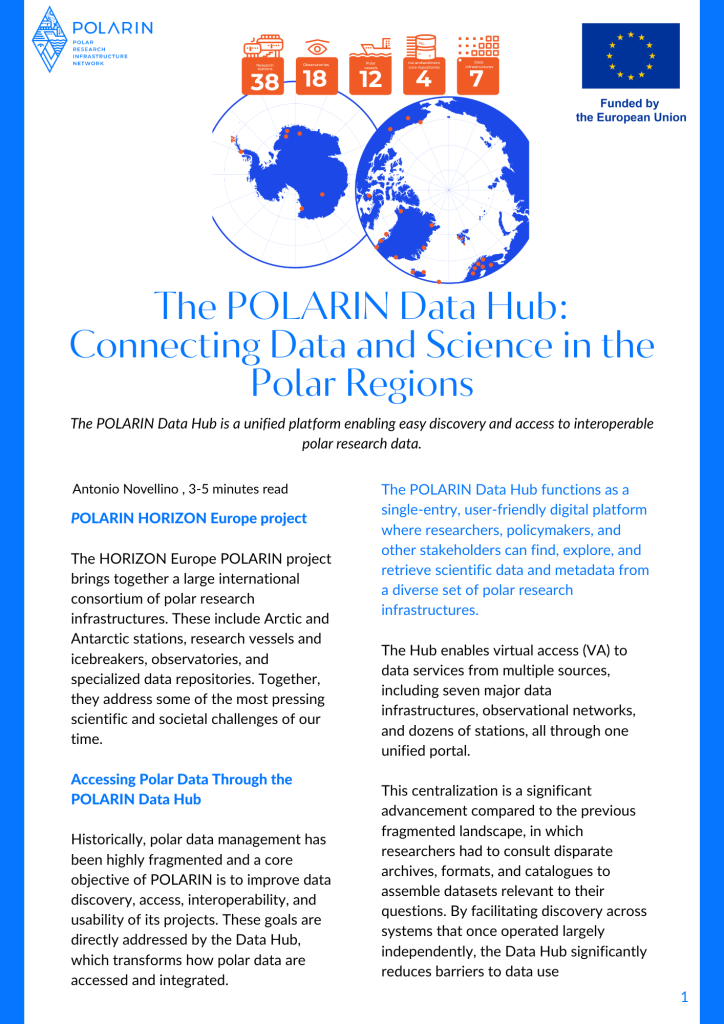
POLARIN Brokering Event and Webinar on the Upcoming 2nd Transnational Access Call The POLARIN project is preparing to launch its second Transnational Access (TA) Call for Proposals, offering researchers the opportunity to conduct fieldwork across a broad network of polar research infrastructures. The call will open on September 1, 2025, and close on October 30, 2025. Final decisions are expected by mid-March 2026, with contract negotiations for selected projects scheduled to begin in April. Funded under the European Union’s Horizon Europe programme, POLARIN brings together 54 partners to provide coordinated access to 64 research infrastructures located in the Arctic and Antarctic including  38 research stations, 12 polar vessels, 18 observatories, 4 core repositories and 7 data infrastructures. The aim of the Transnational Access programme is to foster international collaboration and support scientific work in some of the most challenging and environmentally sensitive regions on Earth. To assist potential applicants, POLARIN will host two dedicated online events in September: On September 2 (15:00–17:00 CEST), the Brokering Event will provide an overview of POLARIN’s objectives, showcase examples of research infrastructures within its network, introduce the POLARIN GIS tool, and share insights from the first access call. Further details, including the agenda and registration links, will be published soon on the POLARIN website. On September 18 (10:30–13:00 CEST), an Informational Webinar will offer detailed guidance on the application process, eligibility requirements, and evaluation criteria. A Q&A session will allow participants to raise specific questions about the call. In addition to welcoming applications from research teams, POLARIN is also calling for experts to join its Evaluator Pool, contributing their knowledge to the peer-review process. Interested individuals are encouraged to register and indicate their areas of expertise.

News

Join the POLARIN Expert Pool – Support the Evaluation of the 2nd Call for Proposals

Join the POLARIN Expert Pool! Would you like to join the POLARIN Expert Pool and participate in the review process of proposals submitted to the POLARIN Transnational Access calls? The EU funded project POLARIN – Polar Research Infrastructure Network – is seeking experts from various fields of polar research, from natural sciences to human dimension, to join an international pool of experts to contribute to the scientific evaluation of Transnational Access applications. Volunteer to the POLARIN Expert Pool here and indicate the field of your expertise. How it works? If your expertise matches our needs, the POLARIN Evaluation Secretariat will contact you to invite you for potential review assignment(s).  Invited experts will submit their reviews via secure connection in the POLARIN Transnational Access Platform (POLARIN TAP) on-line system, where guidelines to conduct the reviews will be provided.  The identity of the reviewers is confidential and will not be disclosed to any applicant.  The invited experts also sign a confidentiality clause and a declaration of no conflict of interest prior to their evaluations. The 2nd POLARIN Transnational Access call will be open from the 1st of September until the 30th of October 2025, with scientific evaluations taking place in Novermber-December 2025. The invited experts will be asked to provide reviews of individual applications, presumably requiring altogether one to two hours of their working time. There is no financial compensation for these evaluations, but a certificate will be provided to demonstrate their contribution as Expert Evaluator in POLARIN. In addition, serving as a reviewer allows one to learn what’s new in the field, to develop critical thinking skills essential to research, and to improve one’s own writing. Early Career Researchers including post doctoral fellows are welcome to register.  Since successive (yearly) calls will be issued till the end of the POLARIN project, the Expert Pool will be in function until the end of the project (28th of February 2029), after which it will automatically close and all information in the pool will be deleted. The data submitted by filling the form will only be used for the purpose of volunteering to the POLARIN Expert Pool as a reviewer. Your data will not be disclosed to third parties and you can at any time resign or ask to modify your information by e-mailing to the POLARIN Evaluation Secretariat at polarin_evaluation_secretariat[at]ogs.it

News

Projects Funded by POLARIN’s First Call (2024) Announced!

We are thrilled to share the results of POLARIN’s very first Transnational Access Call, which ran from October to November 2024. We kindly invite you to explore the full list of projects funded by POLARIN’s First Call, along with detailed information about their research goals, participating infrastructures, etc. on our website.

News

Polar Fieldwork Planning Webinar

Are you preparing for fieldwork in the Arctic or Antarctic? Whether you’re headed to land-based stations or embarking on polar research vessels, planning is key to a successful research campaign. Join us on 12 May 2025, 12:00 – 16:00 GMT, for the POLARIN fieldwork planning webinar to learn more about how to navigate permit processes and logistics challenges, understand risk assessment and field safety, implement ethical and sustainable research practices, and plan effective data management from the start.

News

Connect with POLARIN at EGU2025

The European Geosciences Union (EGU) General Assembly 2025 takes place from 27 April to 2 May in Vienna, bringing together thousands of geoscientists from around the world. Covering all disciplines of Earth, planetary, and space sciences, EGU provides a vibrant forum for researchers, especially early-career scientists, to present their work and exchange ideas. POLARIN is excited to be part of this inspiring event!

Scroll to Top