July 4, 2026

Ambassador

PathoPast- exploring the microbial past of an Antarctic penguin colony

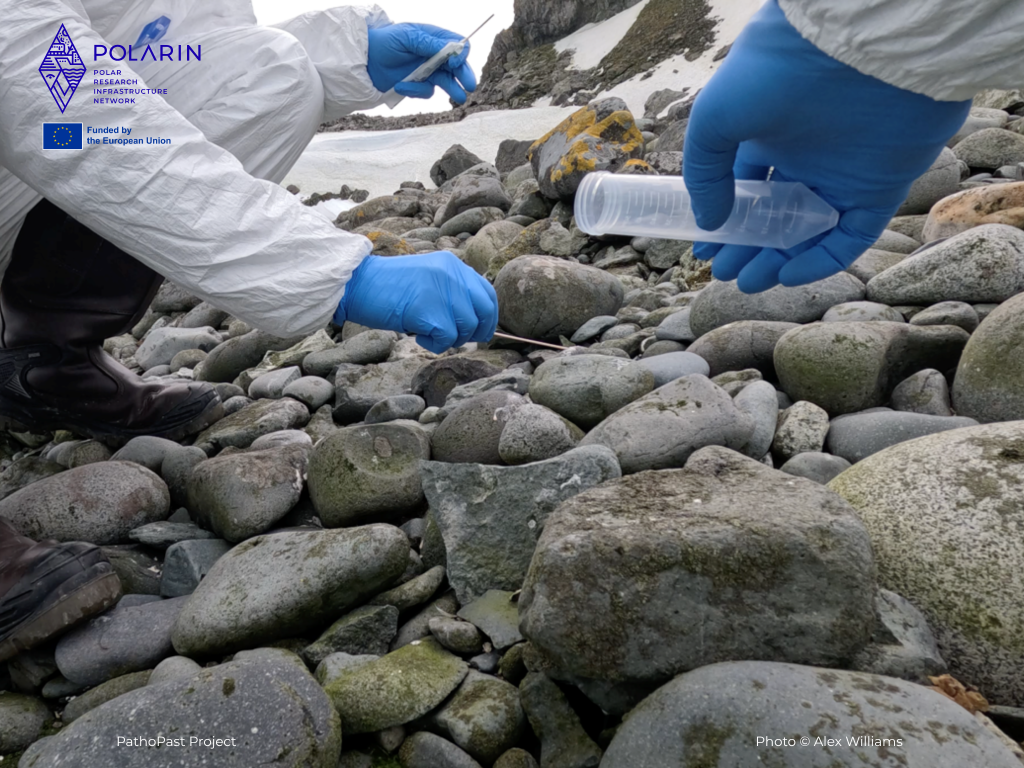
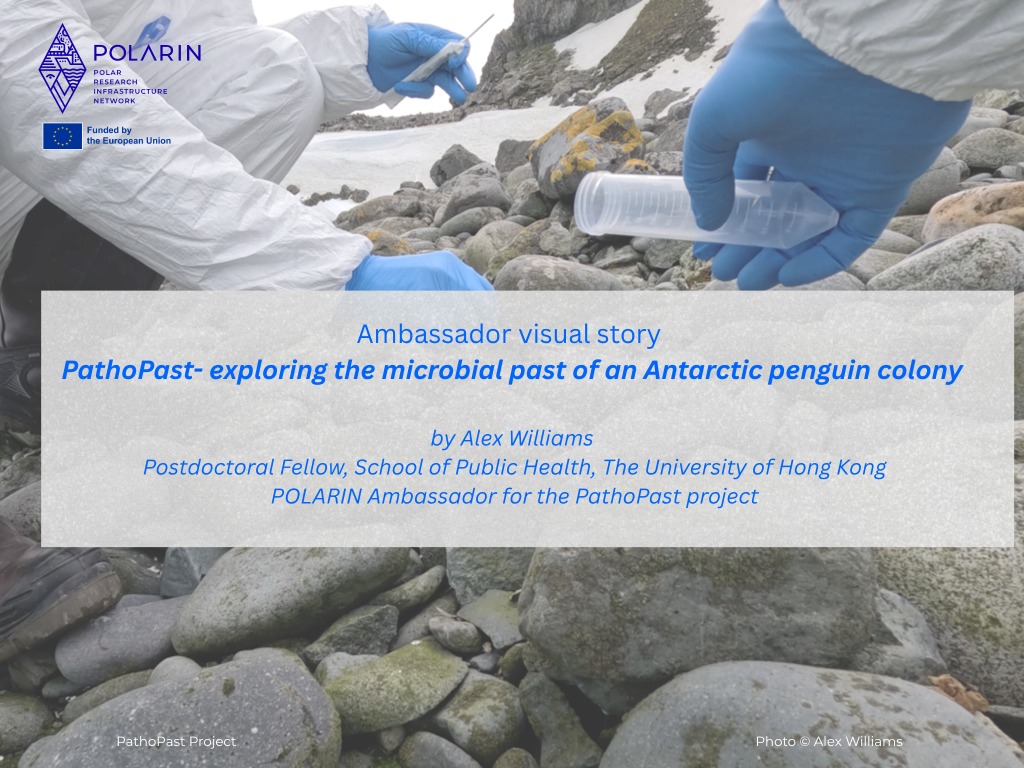
PathoPast- exploring the microbial past of an Antarctic penguin colony A visual story from the field by Alex Williams, Postdoctoral Fellow, School of Public Health, The University of Hong Kong and POLARIN Ambassador for the PathoPast project.   In this visual story, Alex shares his experience as part of the PathoPast field team during an expedition to King George Island, Antarctica. Through photographs and personal reflections, he describes the challenges of conducting research in one of the world’s most remote environments while collecting lake sediment cores, water, soil, and penguin guano samples. These samples will be used to investigate the microbial history of ancient penguin colonies, helping scientists better understand how microbial communities and pathogens have changed over thousands of years.   The story also highlights the remarkable Antarctic landscape and wildlife encountered during the expedition, including gentoo, Adélie, and chinstrap penguins, elephant seals, and seabirds. By documenting both the scientific fieldwork and the realities of life in Antarctica, Alex provides readers with an engaging insight into polar research and demonstrates how preserved environmental records can reveal the ecological and disease history of Antarctic ecosystems.   PathoPast was one of the projects successfully selected through POLARIN’s first call for Transnational Access to Polar Research Infrastructures. Download
News

PathoPast- exploring the microbial past of an Antarctic penguin colony- New Ambassador visual story from the field!

PathoPast- exploring the microbial past of an Antarctic penguin colony POLARIN has published a new Ambassador visual story from the field titled “PathoPast- exploring the microbial past of an Antarctic penguin colony” written by Alex Williams, Postdoctoral Fellow, School of Public Health, The University of Hong Kong and POLARIN Ambassador for the PathoPast project.   The PathoPast project investigates the long-term microbial history of Antarctic penguin colonies by analyzing ancient lake sediments enriched with preserved penguin guano. Because the cold Antarctic environment helps preserve microbial genetic material in lake sediments and penguin guano, researchers can use these preserved records to investigate the microbial history of ancient penguin colonies. A team of three scientists traveled to King George Island, Antarctica, where they spent three weeks collecting lake sediment cores, soil, water, and fresh penguin fecal samples from active colonies while following strict contamination prevention procedures.   With his photographs and reflections, Alex showcase the scientific value, the physical challenges, and beauty of conducting research in Antarctica. Harsh weather, difficult terrain, and partially frozen lakes complicated fieldwork, but the team successfully collected sediment cores from both a former penguin colony site and a control lake with no known penguin activity. Along the way, they observed Antarctic wildlife, including gentoo, Adélie, and chinstrap penguins, elephant seals, skuas, giant petrels, and towering icebergs, emphasizing the region’s unique ecosystem. The collected samples will help researchers better understand how Antarctic microbial communities and pathogens have changed over thousands of years, providing valuable insights into wildlife health and environmental change.   Read Alex’s visual story from the field to learn more about the science and experiences behind the PathoPast project.   PathoPast was one of the projects successfully selected through POLARIN’s first call for Transnational Access to Polar Research Infrastructures.

News

Into the White: A Scientist’s Journey to the Antarctic Ice Sheet – New Ambassador blog story!

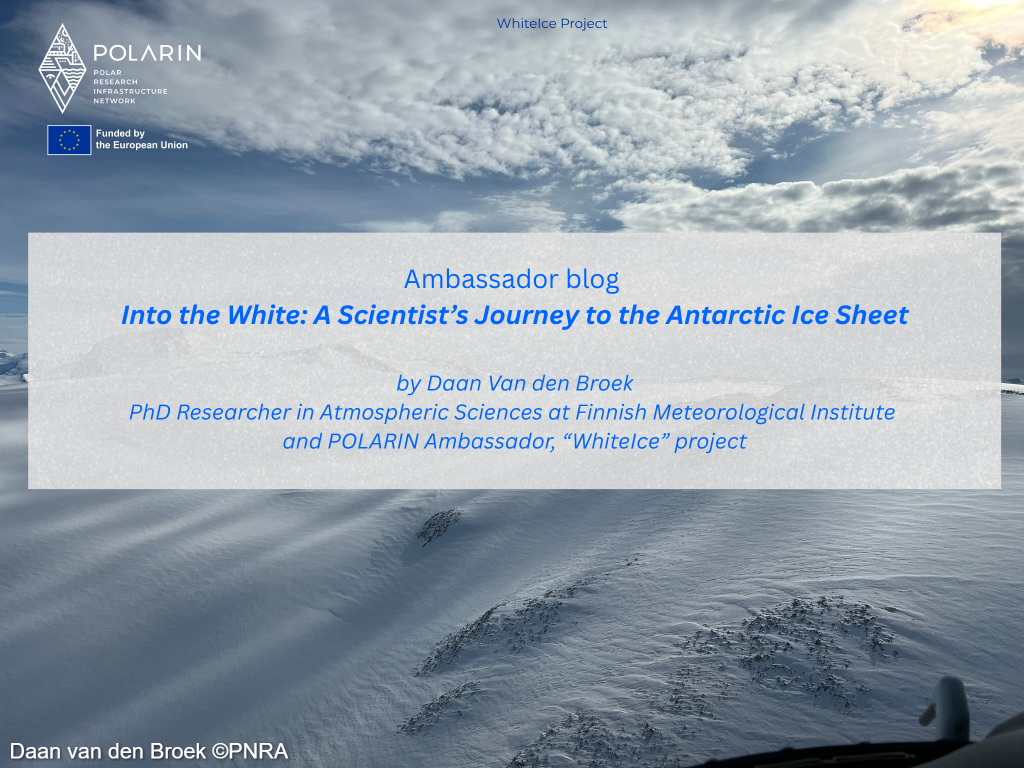
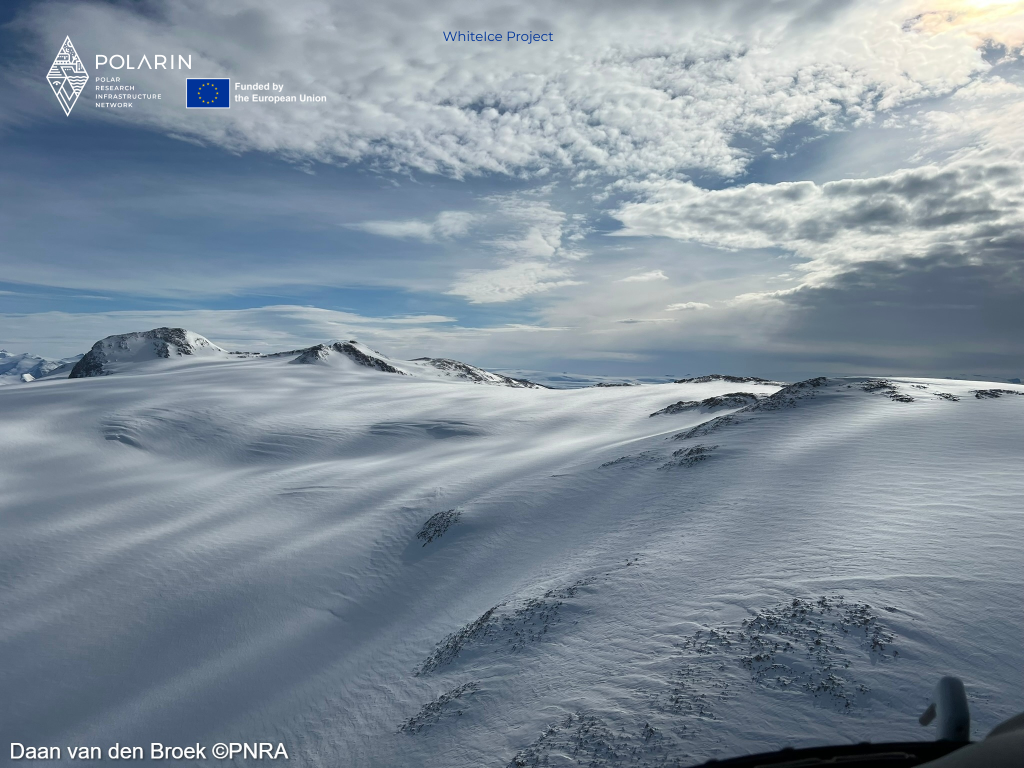
Into the White: A Scientist’s Journey to the Antarctic Ice Sheet POLARIN has published a new Ambassador blog titled “Into the White: A Scientist’s Journey to the Antarctic Ice Sheet” written by Daan Van den Broek, PhD Researcher in Atmospheric Sciences at Finnish Meteorological Institute and POLARIN Ambassador, “WhiteIce” project.     What does it take to conduct climate research in one of the most remote places on Earth? In his blog, Daan shares a first-hand account of his participation in the POLARIN-funded WhiteIce expedition to Antarctica.   The blog follows Daan’s journey from joining the expedition team and preparing for months of fieldwork to carrying out scientific measurements on the Nansen Ice Sheet near the Mario Zucchelli Station. The WhiteIce project investigates the “surface scattering layer,” or “white ice”, a bright layer that forms on melting ice surfaces and influences how much sunlight is reflected back into space. By collecting weather, radiation and drone observations, the research aims to improve climate models and strengthen projections of future climate change.   Alongside the science, Daan reflects on the realities of polar fieldwork, from complex logistics and changing weather conditions to the breathtaking landscapes of Antarctica. His story highlights both the challenges and the rewards of conducting research in extreme environments, demonstrating how international collaboration, careful preparation and adaptability are essential for successful polar science.   Read Daan’s full blog to discover the people, science and experiences behind the White Ice project.   WhiteIce was one of the projects successfully selected through POLARIN’s first call for Transnational Access to Polar Research Infrastructures.

Ambassador

Into the White: A Scientist’s Journey to the Antarctic Ice Sheet

Into the White: A Scientist’s Journey to the Antarctic Ice Sheet A blog by Daan Van den Broek, PhD Researcher in Atmospheric Sciences at Finnish Meteorological Institute and POLARIN Ambassador, “WhiteIce” project.   Daan’s blog is a story of atmospheric scientist participating in the POLARIN-funded WhiteIce expedition to Antarctica. It describes his journey from being selected for the project, through months of intensive preparation, to conducting fieldwork on the Nansen Ice Sheet near the Mario Zucchelli Station. The expedition focused on studying the “surface scattering layer” (or “white ice”), a bright layer that forms on melting ice and affects how much sunlight is reflected back into space. By collecting weather, radiation, and drone data, the research aims to improve climate models and enhance predictions of future climate change.   Beyond the scientific objectives, the blog acts as a personal reflection on the challenges and rewards of polar research. Van describes the demanding logistics, unpredictable weather, and the need for flexibility during fieldwork, while also highlighting the breathtaking Antarctic landscape and the unforgettable experience of working in one of the world’s most remote environments. Despite setbacks, such as an earlier-than-expected melt season, the team successfully gathered valuable data and emphasized the importance of international collaboration and logistical support in making the expedition a success.   WhiteIce was one of the projects successfully selected through POLARIN’s first call for Transnational Access to Polar Research Infrastructures.   Download
News

Arctic Carbon Cycling: Linking terrestrial and aquatic systems (ARC-LINK) – New Ambassador visual story from the field!

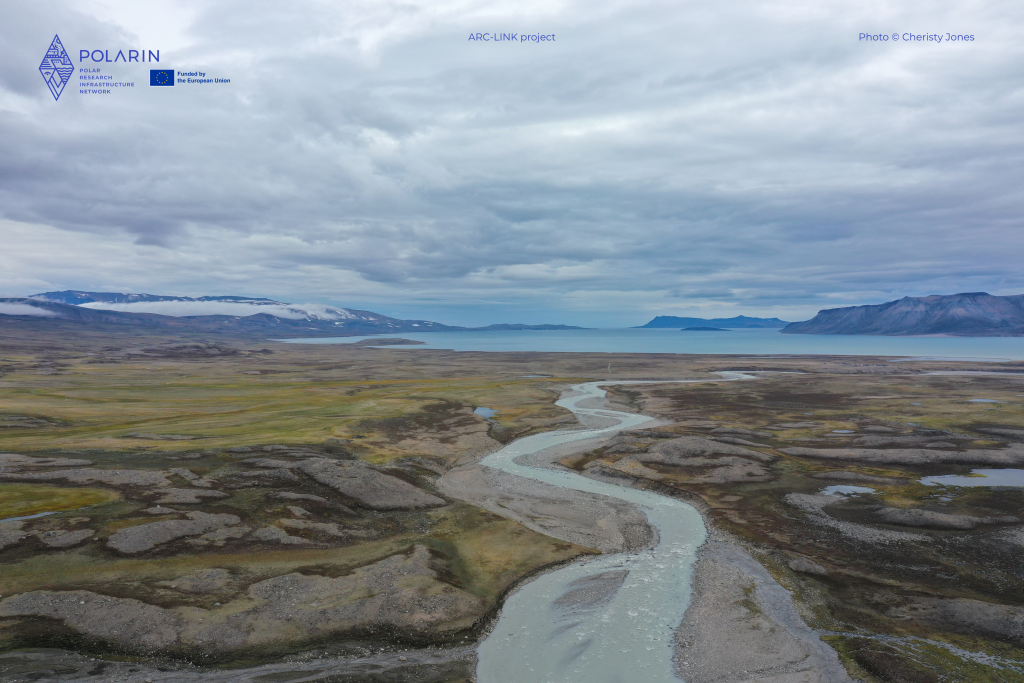
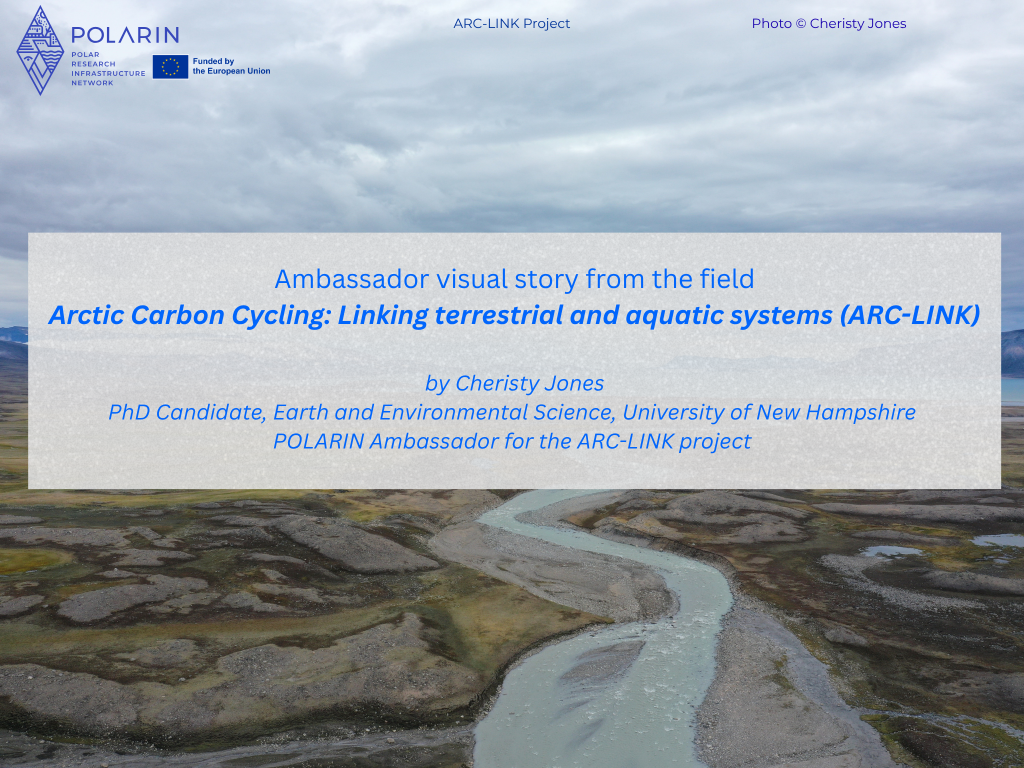
Arctic Carbon Cycling: Linking terrestrial and aquatic systems (ARC-LINK) POLARIN has published a new Ambassador visual story titled Arctic Carbon Cycling: Linking terrestrial and aquatic systems (ARC-LINK) developed by Cheristy Jones, POLARIN Ambassador, PhD Candidate, Earth and Environmental Science, University of New Hampshire.     For the ARC-LINK project, Cheristy travelled from Boston, USA to Zackenberg, Greenland to study how carbon and nutrients move through permafrost catchments, compare glacial and non-glacial systems at high spatial resolution and how aquatic carbon connects to CO₂ and CH₄ emissions. Through her photographs and reflections, Cheristy travels us to Greenland to witness permafrost thaw, Arctic flora and fauna.   Explore Cheristy’s visual story to learn more.   ARC-LINK was one of the projects successfully selected through POLARIN’s first call for Transnational Access to Polar Research Infrastructures.

Ambassador

Arctic Carbon Cycling: Linking terrestrial and aquatic systems (ARC-LINK)

Arctic Carbon Cycling: Linking terrestrial and aquatic systems (ARC-LINK) A visual story by Cheristy Jones, POLARIN Ambassador, PhD Candidate, Earth and Environmental Science, University of New Hampshire.   The Arctic is changing rapidly, with important consequences for carbon cycling. Cheristy Jones, a fifth-year PhD candidate at the University of New Hampshire, travelled from Boston, USA to Zackenberg, Greenland to study how carbon and nutrients move through permafrost catchments, compare glacial and non-glacial systems at high spatial resolution and how aquatic carbon connects to CO₂ and CH₄ emissions.   Cheristy’s visual story provide us with photographic captures and insights from her field work in Greenland, including training in the field, permafrost thaw, arctic flora and fauna. As Cheristy notes:   “Our time in Zackenberg flew by and we were sad to leave all of the amazing new people we met. Hopefully, we will be back to expand our work in the future. Through POLARIN, I was able to expand my PhD research beyond my original field sites and apply my questions about carbon cycling to a new Arctic region. The program provided hands-on experience with eddy covariance data, strengthening my skills in flux processing and interpretation. Just as importantly, POLARIN broadened my collaborations and professional network, connecting me with international researchers and opening doors for future cross-site and interdisciplinary work. POLARIN provided a rare opportunity for PhD students to lead their own grant.”   ARC- LINK was one of the projects successfully selected through POLARIN’s first call for Transnational Access to Polar Research Infrastructures.   Download
Scroll to Top